ServicesTurf Protection Film
Turf Protection Window Film in Baytown
If a strip of your artificial grass keeps melting in the same spot, a nearby window is probably focusing sunlight onto it. We find the window doing it, apply a film that breaks up that reflection, and leave the glass looking clean from the inside.
Why Windows Burn Turf and How Film Stops It
Modern low-E windows are coated to bounce heat away from the house. That is good for your cooling bill, but the glass can flex slightly inward on dual-pane units, turning the pane into a shallow concave mirror. On a bright afternoon it concentrates sunlight into a hot band that can soften synthetic turf blades, warp vinyl siding and fade outdoor cushions.
Turf protection window film reduces the outward reflection from that glass. Instead of a focused beam, the light that leaves the window is diffused and weaker, so the surface it lands on stays within a normal temperature range. You keep the energy benefits of your windows and stop paying to replace the same patch of grass.
It is the right call when the damage follows a clear line, shows up at the same time of day, and lines up with a window. If the problem is heat or glare inside the room instead, our home window tinting or ceramic window film pages cover that work.
What the Job Includes
- 01
Tracking the reflection
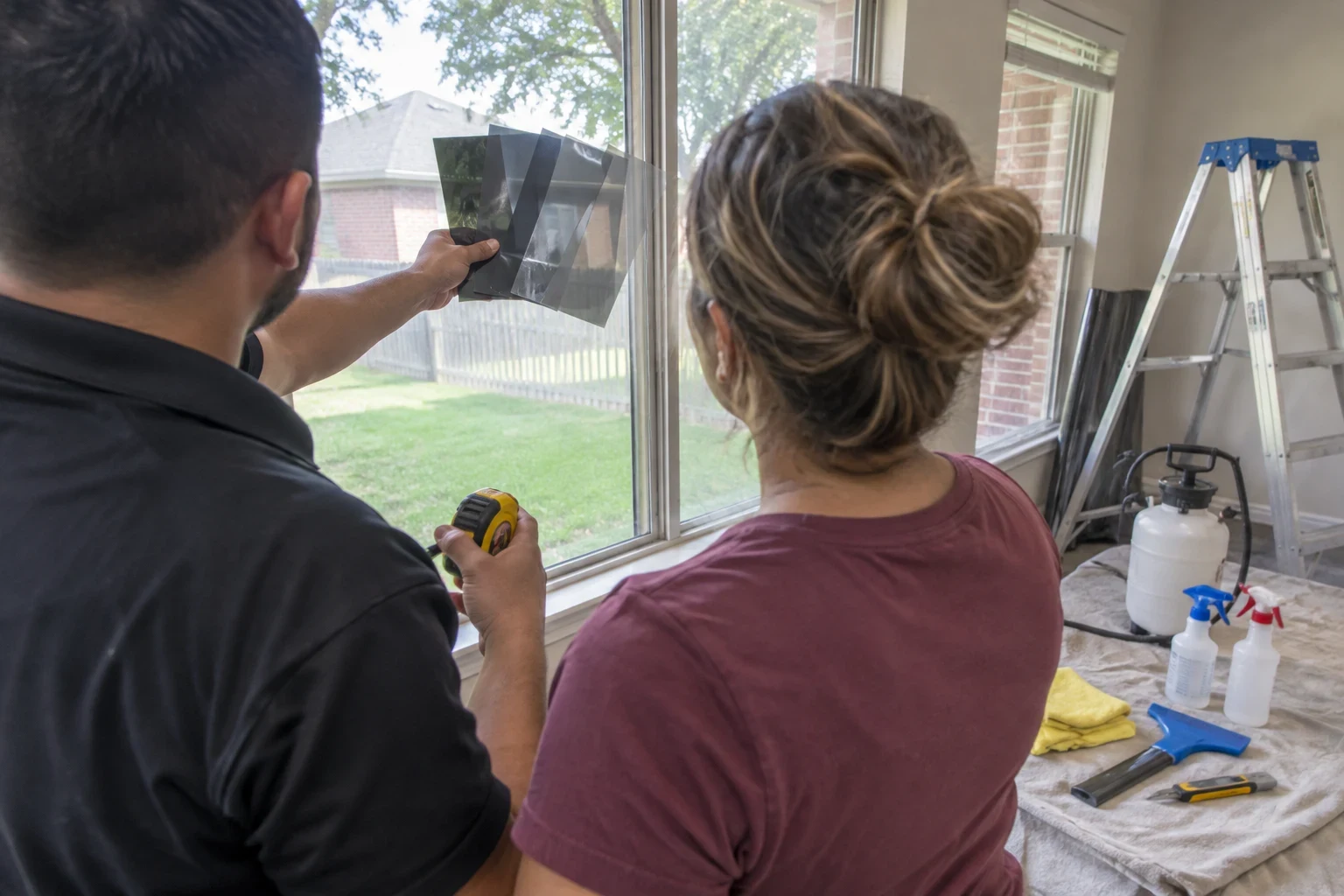
We look at where the damage sits and match it to the window and sun angle causing it. Sometimes it is more than one pane, and sometimes it is a window on the house next door.
- 02
Checking the glass first
We confirm whether the window is dual-pane low-E, tempered or annealed before choosing a film. That keeps the film compatible with the glass and avoids stress on the seal.
- 03
A film matched to the problem
Turf protection films are made to cut exterior reflectance, not to darken the room. Most customers notice little change in the view from inside.
- 04
Careful installation
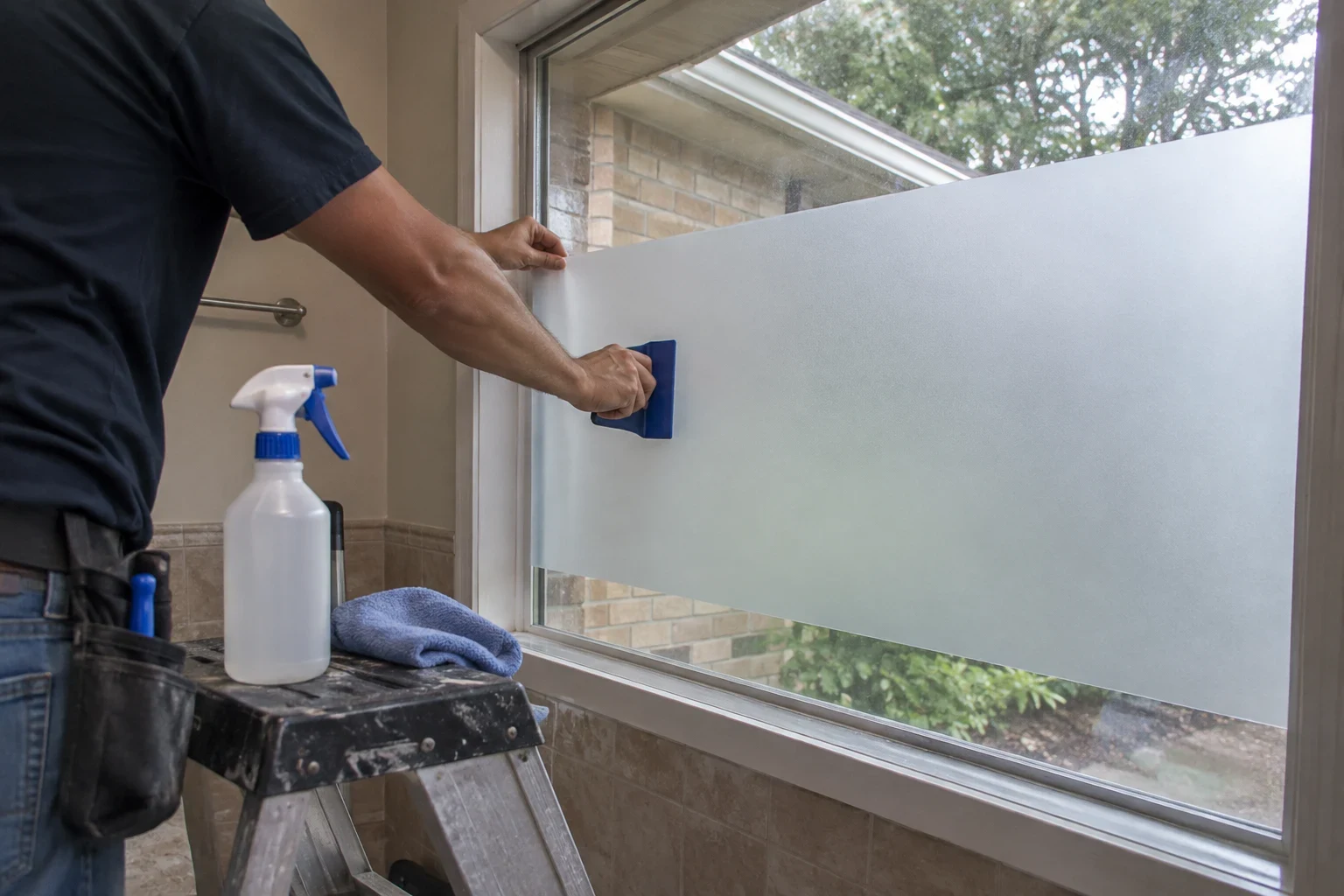
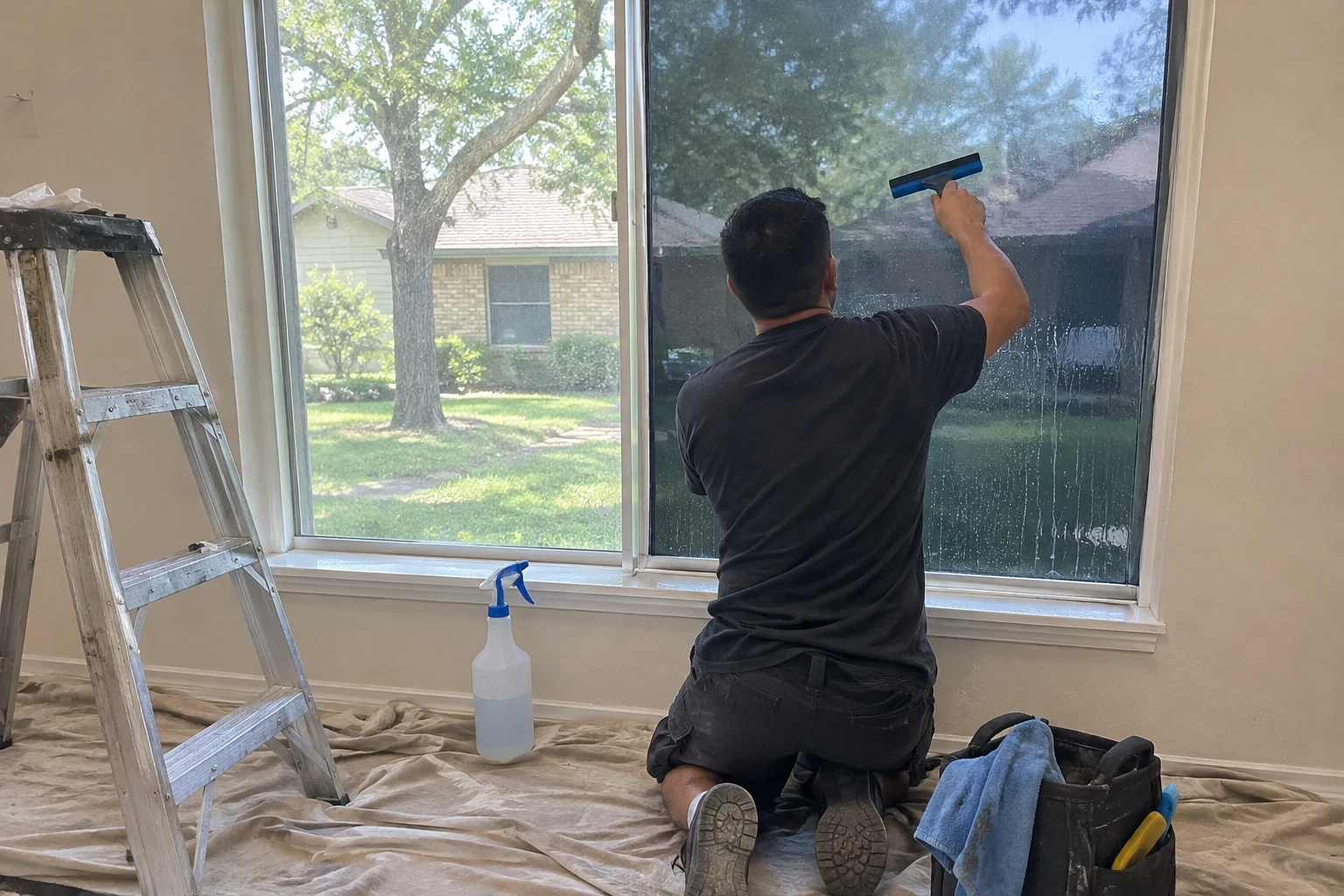
The glass is cleaned, edges are detailed, and the film is squeegeed flat so it bonds evenly. We protect sills, flooring and plants around the work area.
- 05
Cleanup and care notes
We take our scraps and liners with us and tell you how long to wait before washing the glass.
Questions about Turf Protection Film?
Call(281) 843-4500Signs a Window Is Damaging Your Yard
Melted or matted turf lines
Artificial grass that looks crimped, shiny or flattened in a narrow strip is a classic sign of focused reflection.
Wavy or bubbled siding
Vinyl siding that warps in one area, often on a wall facing your windows or a neighbor's, usually points to the same cause.
Damage that moves with the seasons
If the burn mark shifts a little through the year, it is following the sun's angle off a pane of glass.
Hot spots you can feel
On a clear afternoon you may feel a patch of turf or decking that is far hotter than the ground around it.
Faded or softened outdoor items
Patio cushions, plastic planters or a grill cover that degrade faster on one side are worth checking against nearby windows.
How a Turf Film Visit Goes
- 1
A call and a few questions
You tell us what is melting and roughly when it happens. We set a time to come look, ideally while the sun is in the problem position.
- 2
On-site assessment
We trace the reflection, check the window type and any labels on the glass, and talk through whether film is the right fix. You get a clear written quote before any work.
- 3
Installation day
Most homes need only a few panes treated, so the visit is usually short. We prep the glass, apply the film and trim it to the frame.
- 4
Curing and follow-up
The film may look slightly hazy for a few days while moisture dries out, especially in humid weather. That clears on its own, and we are a phone call away if you have questions.
What Affects the Price
Turf protection jobs are often small, but each one is priced from what we see on site. Your quote lists the panes, the film and any extra work so nothing comes as a surprise.
- Number and size of panes
- One sliding door costs less than a row of tall picture windows. We treat only the glass that is actually causing damage.
- Which side of the glass
- Films that reduce reflection are often applied to the outside surface. Height and ladder access to that side affect labor time.
- Film type
- Different films balance reflection control, clarity and durability differently. We explain the options instead of steering you to the priciest one.
- Glass condition
- Old adhesive, hard water staining or damaged seals need attention before film goes on, and we will tell you if a pane should be replaced instead.
Turf Protection Film Questions
Do I need a permit to put film on my windows?
Residential window film is generally treated as a surface application, not a structural change, so a building permit is not typically required in our area. If you live in a community with an HOA, check whether it has rules on exterior window appearance, since this film may be visible from outside. We are happy to describe the film so you can ask them.
Will film affect my window manufacturer's warranty?
Some window makers have conditions about film on dual-pane or low-E glass. We look at the glass and suggest you check your window paperwork before installation. Choosing a film that is compatible with your glass type is part of how we plan the job.
What if the reflection comes from my neighbor's window?
That happens a lot. The film has to go on the window doing the reflecting, so we can only treat it with the owner's permission. Many neighbors are glad to agree once they understand the cause, and we can explain it to them.
Will the film make my room darker?
Turf protection films are chosen to cut outward reflection, not to tint the room. Most people see very little change from inside. If you would also like heat rejection or privacy, we can talk about combining options.
Does it repair turf that is already melted?
No. Film stops future damage, but melted blades usually need to be replaced or patched by your turf installer. It is worth putting the film up first so the new section does not burn the same way.
Save the Next Patch of Grass
Tell us where the damage is and when you notice it. We will find the window responsible and give you a straight answer on whether film fixes it.