ServicesCommercial Window Tinting
Commercial Window Tinting in Baytown
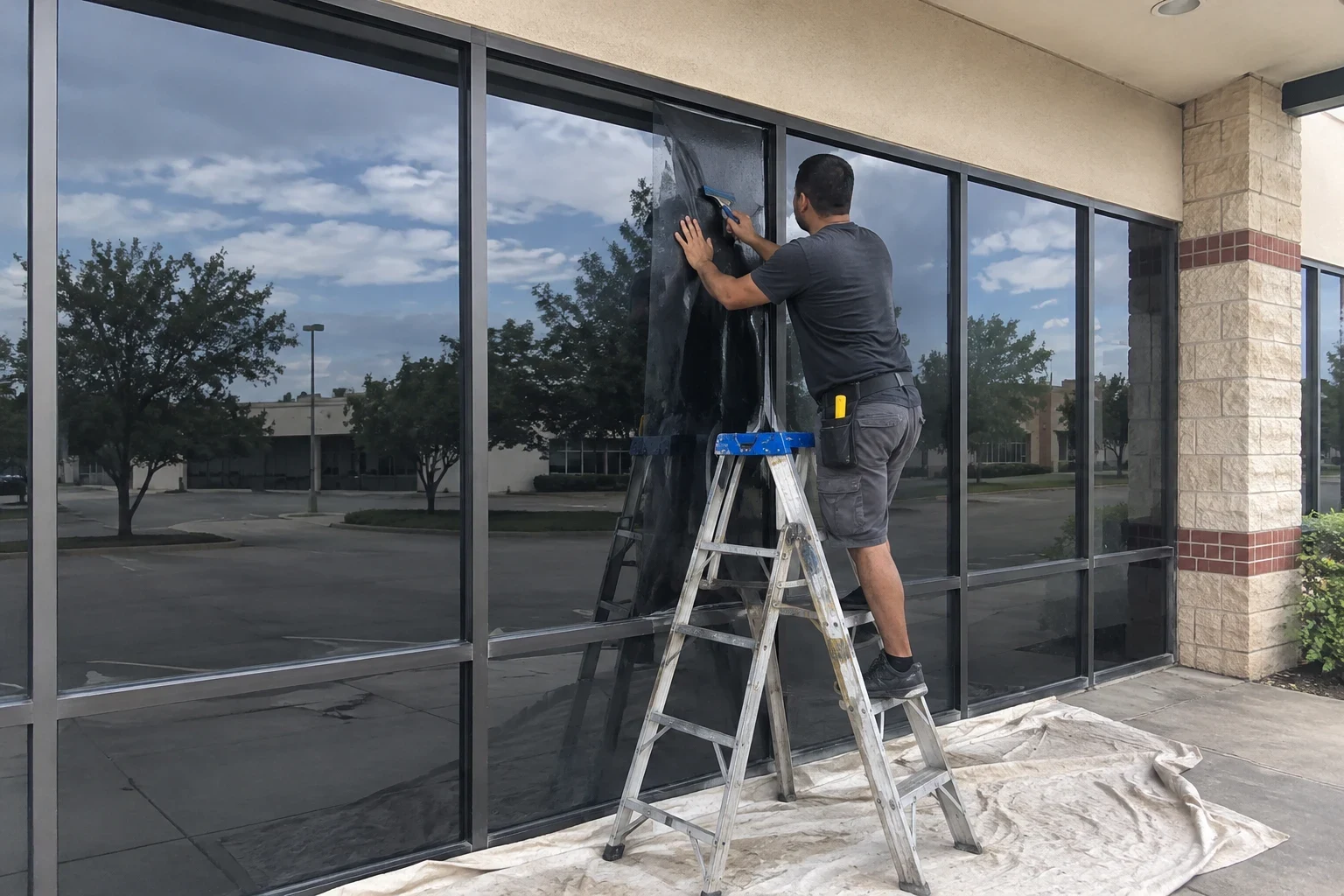
We install window film on storefronts, shops and commercial buildings to cut solar heat, tame glare and block UV that fades merchandise. Before any film goes up, we check your glass type and any landlord or city requirements, so the job is done right the first time.
Cooler, Easier-to-Use Space Without Replacing Glass
Big panes of glass let in light, and they also let in a lot of heat. Commercial window tinting adds a thin film to the inside of your existing windows to reject much of that heat, cut glare on screens and counters, and block most of the UV that bleaches displays and flooring. Your staff gets a more comfortable room, and your cooling system gets a little relief.
Commercial glass is not all the same, and that is where care matters. Tempered, laminated, insulated and low-E units each react differently to film. Some glass makers limit which films they will stand behind. We identify what you have and pick a film that suits it, so you are not trading a cooler lobby for a cracked pane or a voided glass warranty.
Most interior film jobs do not need a building permit. Some leases, property managers and owner associations do want to approve anything that changes how the building looks from outside. We talk that through with you before we schedule, so nobody is surprised later.
What a Commercial Tint Job Includes
- Glass and frame check
- We look at each window type, its size, sun exposure and the condition of the seals. Failing seals or existing damage get pointed out before we quote.
- Film matched to your goals
- Heat rejection, glare reduction, privacy or a cleaner look from the street. We may suggest ceramic film for high heat rejection with a light tint, or reflective window film where daytime privacy matters most.
- Approval paperwork help
- If your landlord or property manager needs product data sheets or sample swatches, we supply them so you can get sign-off quickly.
- Clean, careful install
- We protect sills, displays and floors, clean the glass thoroughly and trim the film neatly to the frame edges.
- Walkthrough and care notes
- We show you the finished work and explain how to clean the film so it lasts.
Signs Your Building Could Use Window Film
Hot spots near the glass
Staff move desks or customers avoid seats by the windows on sunny afternoons. Under the strong Gulf Coast sun, west- and south-facing glass is usually the worst.
Faded merchandise or signs
Products, fabric and printed displays near the front windows lose color long before they sell.
Glare on screens and registers
Point-of-sale screens and monitors are hard to read for part of the day.
The AC never catches up
One zone of the building runs warm while the rest is comfortable, and the thermostat fights it all summer.
Too much view inside
Passersby can see straight into back offices, storage or work areas you would rather keep private.
What Sets the Price
We price each commercial job from the glass itself, so the quote comes after we see it. Each area is listed separately, and the figure we give is what you pay unless the scope changes.
How much glass
Square footage accounts for most of the cost, and long storefront runs often cost less per foot than lots of small panes.
Which film
Ceramic and specialty films are priced above standard dyed or reflective film, and they act differently on some glass.
Height and reach
Ground-floor windows are simple. Tall glass, clerestory panes or hard-to-reach interiors call for ladders, lifts or more time.
Taking off old film
Peeling or bubbled film, adhesive included, must be removed cleanly before new film is applied.
When we work
Installing after closing or in stages around your business can add labor.
How the Work Goes
- 1
Free quote by phone, then a site visit
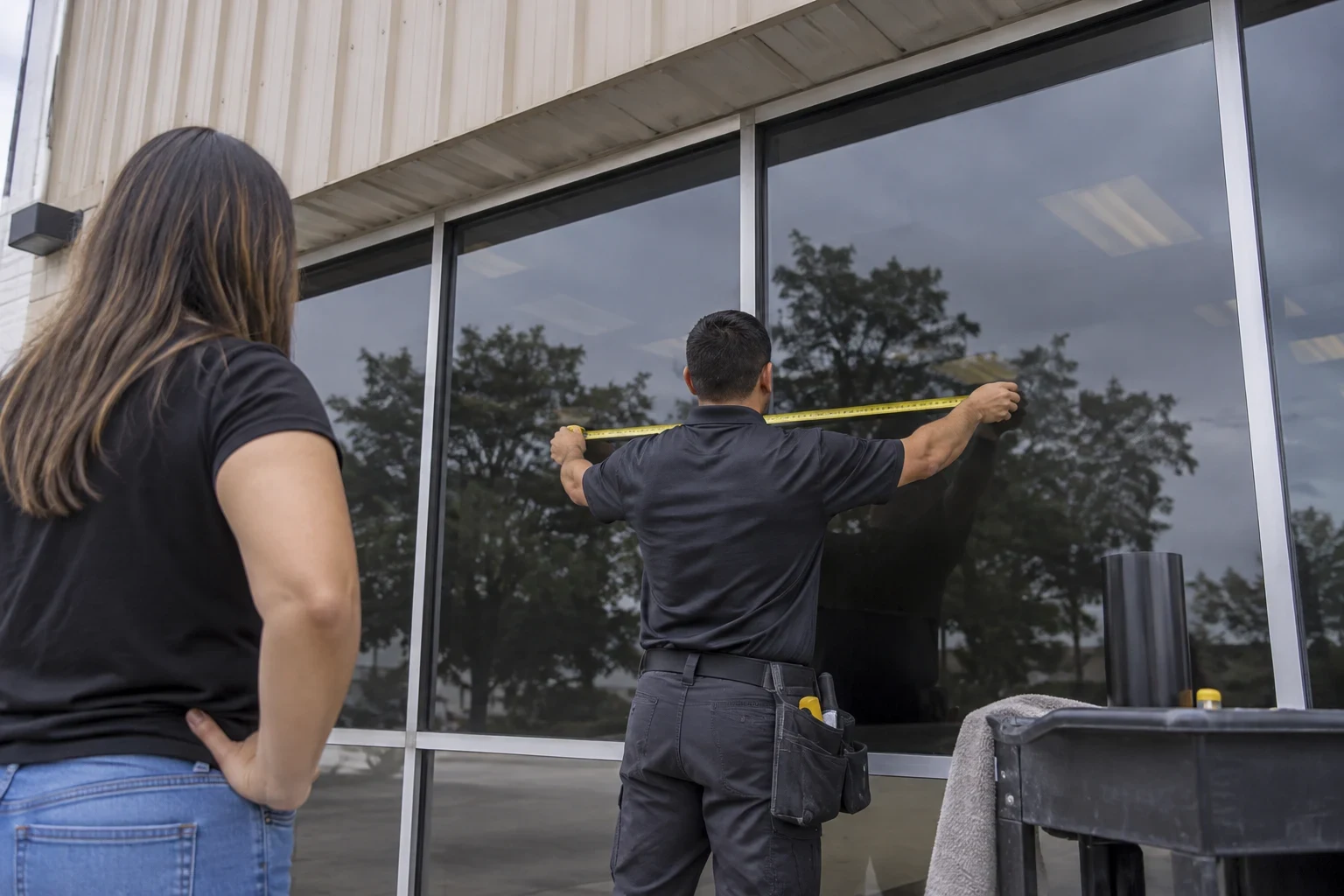
Tell us about your building and what bothers you most. We visit, measure, identify the glass and bring film samples you can hold up to your own windows.
- 2
Written estimate and approvals
You get a line-item estimate by window area. If your lease or property manager needs to approve the film, we give you what they ask for before anything is ordered.
- 3
Install on your schedule
We can work in sections, early, or after closing so your doors stay open. Film goes on with a soapy solution, so there is no dust and no strong smell.
- 4
Curing and final check
The film can look slightly hazy or show small water pockets for the first few weeks while it dries. That is normal, and we come back to look at anything that does not clear.
Common Commercial Tinting Questions
Does tinting business windows need a permit?
Usually not. Interior window film rarely calls for a building permit. A lease clause or property manager rule about exterior looks comes up more often. We raise it early and can hand you product sheets to get approval.
Can film harm double-pane or low-E glass?
It can if the wrong film meets the wrong glass, since some films make the pane take on more heat. We identify each glass type first and choose a film rated for it, and if a pane is a poor fit we say so.
Do we have to close the store?
No. We can tint a section at a time, start early or come after hours. The work is quiet and makes no dust.
Will the inside look dark?
Not always. Many films, ceramic ones especially, block a lot of heat and stay fairly light. We bring samples so you can see the tint on your own windows first.
Can you do offices and security film too?
Yes. Office window tinting handles glare and privacy for workspaces, and security window film helps keep broken glass in place. If it suits your building, we can do both in one visit.
Find Out What Your Glass Needs
Tell us about your building and the problem you want solved. We will look at your windows, check any approval needs and give you a clear written estimate.