ServicesCeramic Window Film
Ceramic Window Film in Baytown
Ceramic window film blocks much of the sun's heat and nearly all UV without turning your rooms dark or mirrored. We check your glass first, explain any HOA or window warranty questions plainly, and install film that keeps the view you bought the house for.
How ceramic film works and who it suits
Instead of metal or dye, ceramic film stops heat with tiny ceramic particles. They go after infrared light, the part of sunlight that feels hot, and let a lot of visible light pass. So even a fairly light film can change how a west-facing bedroom or an afternoon-baked living room feels.
With no metal inside, ceramic film does not corrode in humid air or weaken cell, Wi-Fi and smart home signals. It also keeps its color rather than turning purple like cheap dyed film.
Choose it when you want heat rejection and UV protection without a reflective look from the street. If daytime privacy matters more, we may suggest our privacy window tinting or reflective window film and explain the reason.
What a ceramic film job covers
- 01
A look at the glass before anything else
We note whether each window is single-pane, dual-pane, tempered or low-E. Some film and glass combinations build heat stress, so each pane gets a film suited to it rather than one product on every window.
- 02
Straight answers about HOA and warranty terms
A building permit is seldom needed for film on a house. Your HOA may still set rules on how windows look from outside, and some window makers attach conditions to film. We tell you what to look into so nothing surprises you.
- 03
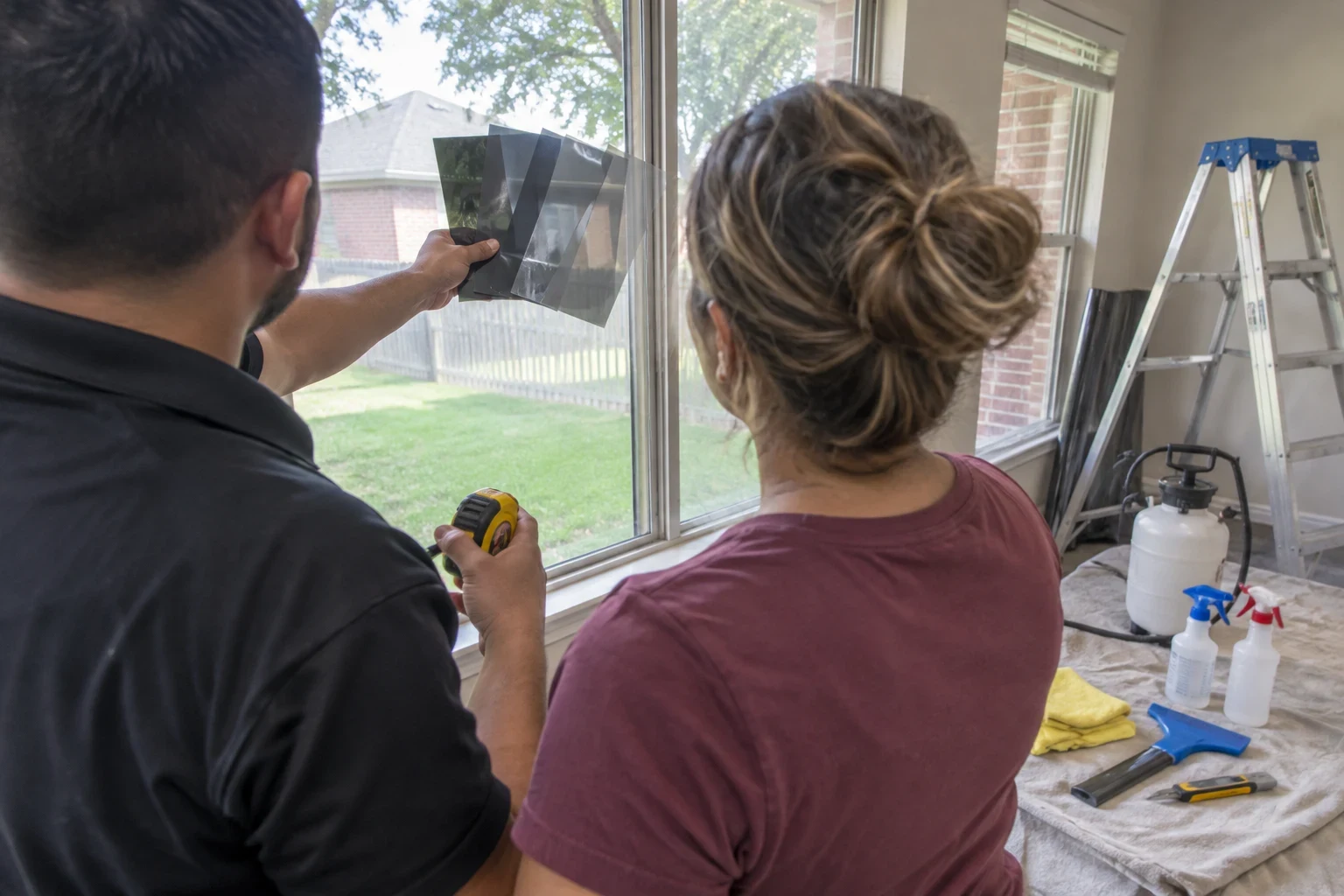
Samples tried on your windows
Samples go on your glass so you can see the light and color in each room at the hours you actually spend there.
- 04
Covering and cleaning
We lay drop cloths, move whatever is in the way and clean each pane carefully so no dust or specks get trapped under the film.
- 05
A tidy, trimmed finish
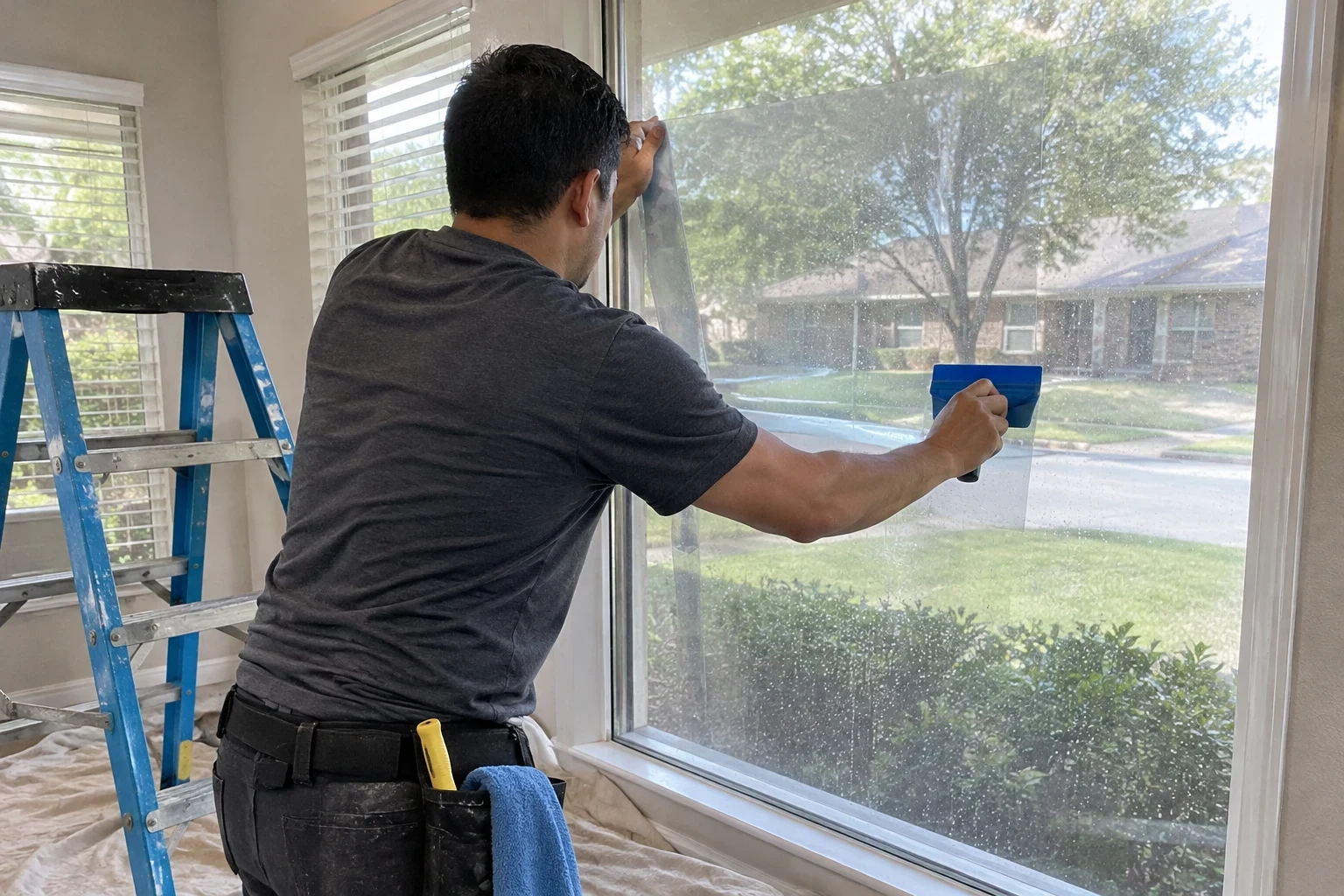
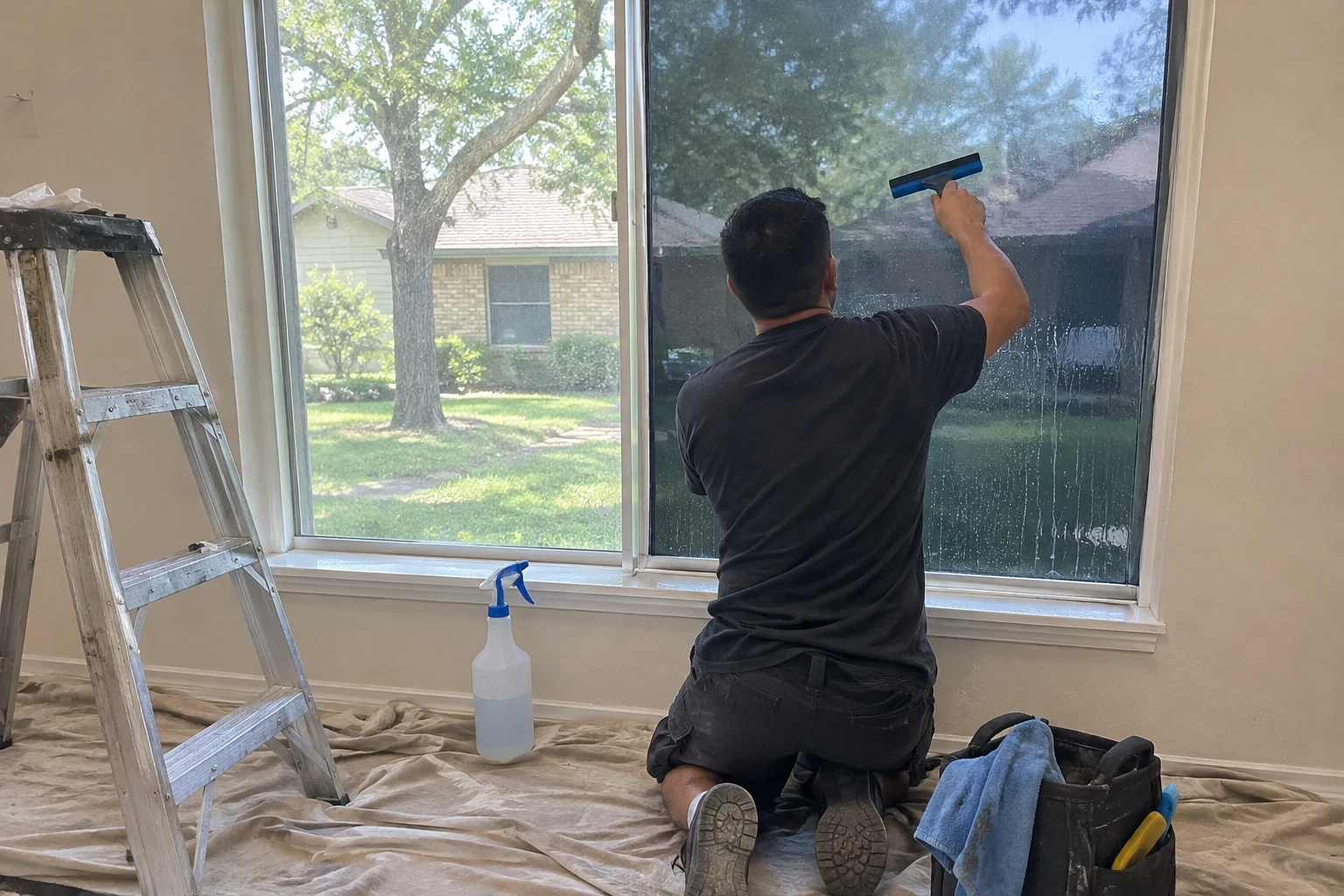
We cut the film with a narrow, even gap at the edge and squeegee it flat, then wipe the sills and leave the room the way it was.
Questions about Ceramic Window Film?
Call(281) 843-4500When ceramic film is worth considering
A room too hot to use in the afternoon
When one side of the house stays warm long after the AC has cooled the rest, sun through the glass is often to blame.
Floors and furniture losing color
Pale patches on wood floors, rugs or a couch by the window show UV damage that grows with every sunny day.
Screens washed out by glare
A TV or work monitor that is hard to see at certain times of day is a frequent reason people call about ceramic film.
Bad memories of old tint
Old films that went dark, mirrored or purple turned many people off. Ceramic film can stay light and neutral.
Poor reception since your last film
Metalized film can weaken cell signal indoors. Ceramic film takes that problem away.
How a ceramic film job goes
- 1
Call for a free quote
Tell us which rooms bother you and roughly how many windows you have. We go over the choices and set up a visit.
- 2
A visit with samples
We measure, check the glass on each window and show you shades right on it. The written quote breaks out each window or group of windows.
- 3
The install
Most homes take part of a day to a full day, based on the window count. We prep, install and clean room by room, so the house never turns into a mess.
- 4
Drying time and care
While the moisture dries, the film can look slightly cloudy or show small water pockets for a few days to a few weeks, longer when it's cool or overcast. Hold off about 30 days before cleaning it, then use a soft cloth and an ammonia-free cleaner.
What goes into the price of ceramic film
Ceramic film costs more per square foot than dyed or basic metalized film because of how it is made. What you pay mostly depends on how much glass you have and how hard it is to reach. We write out every line so you can see what each part costs.
- Amount of glass
- The number and size of windows count most. Sliding doors and large picture windows use more film than a few bedroom windows.
- Performance level and shade
- Ceramic film comes in several grades, and blocking more heat with a lighter shade usually costs more.
- Reaching high or tight spots
- Second-floor windows, tall glass in stairwells and panes behind built-ins take more time and gear.
- Stripping existing film
- Old film that has failed must come off, with its glue cleaned away, before the new film goes on.
Questions people ask about ceramic film
Will ceramic film make a room darker?
Only when you pick a dark shade. Lighter ceramic films still stop a good amount of heat, and we try samples on your windows so you can judge the light first.
Does it interfere with cell service or Wi-Fi?
No. Ceramic film has no metal in it, so cell, Wi-Fi and GPS signals get through. That's one of the main reasons people choose it over metalized film.
Is it safe on dual-pane or low-E windows?
Often it is, but it depends on the exact glass and film. Some pairings put extra heat stress on the inner pane, so we check every window and recommend only films that fit it.
Do I need a permit or HOA approval?
A building permit usually isn't required for film on a house. Some HOAs have rules about how windows look from the street, so check your guidelines or let us help you find the parts that apply. Because ceramic film looks neutral, it usually raises fewer questions than mirrored film.
How is ceramic film different from reflective film?
Reflective film has a metal layer that bounces heat back out, giving a mirror finish and privacy by day. Ceramic film absorbs and blocks infrared without a mirror look. If you're torn, our reflective window film page goes through that choice in more detail.
Keep your view and lose the heat
Let us know which windows bother you and we will lay out your ceramic film choices in plain words. The quote is free, and you do not have to decide that day.