Baytown, TX
Window Tinting in Baytown, Fitted Right and Up to Code
We install home window tinting, ceramic film, privacy film and security film for houses and businesses in Baytown, La Porte and Mont Belvieu. Before any film goes on, we check your glass type, your HOA or lease rules and any code limits, so the result keeps rooms cooler and stays approved.
- Free quotes by phone
- Glass checked before film
- Written line-item estimates
- Careful, clean installs
How a Tinting Job Runs
Most houses are finished in one visit, and you can stay home the entire time.
- 1
Talk it through by phone
Let us know which rooms run too hot, too bright or too open to view. We ask about your windows and any HOA or lease rules, then book a time to see them.
- 2
Look at the glass
We take measurements, identify the glass and hold film samples up to your own windows. Your written estimate spells out every line.
- 3
Prep and install
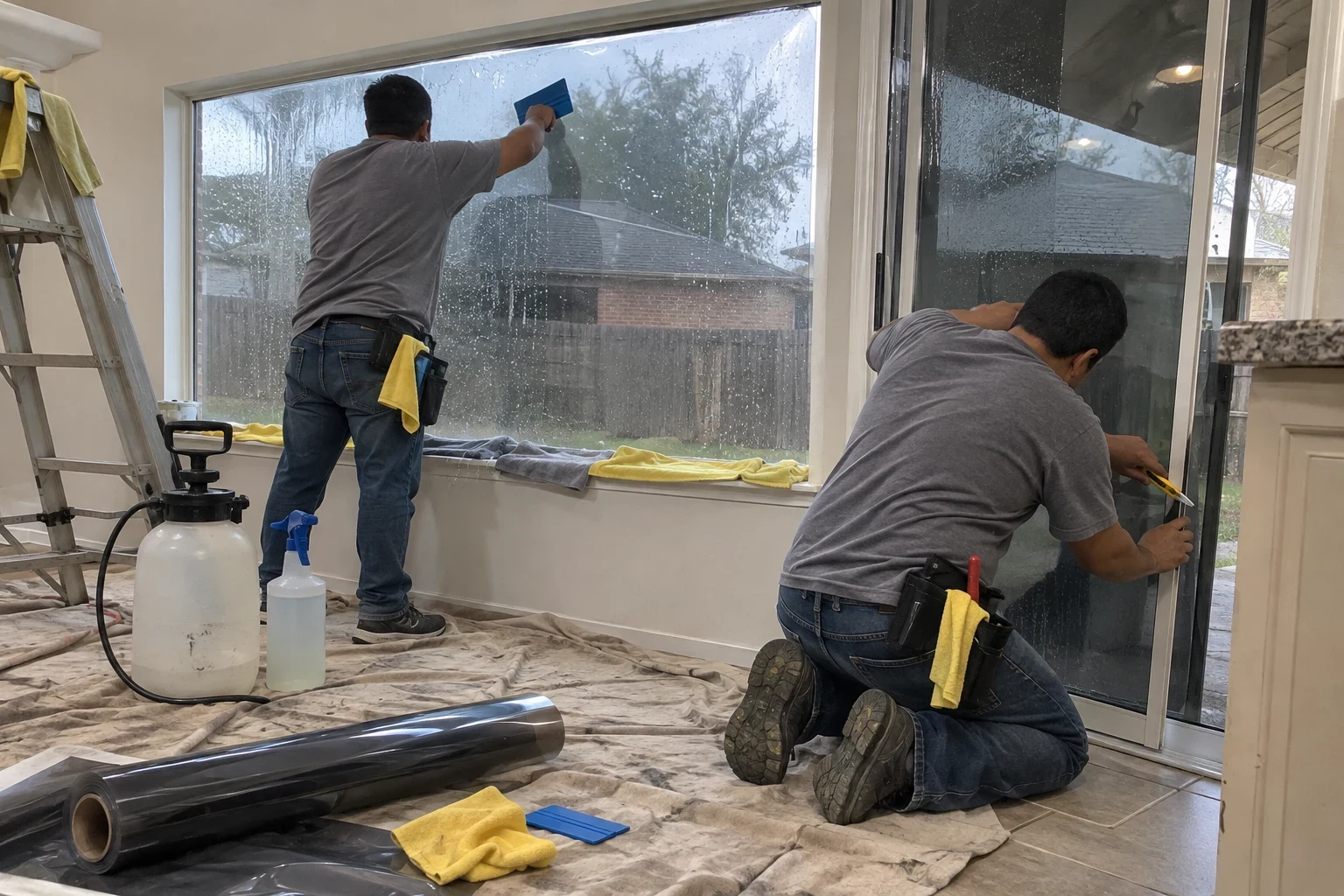
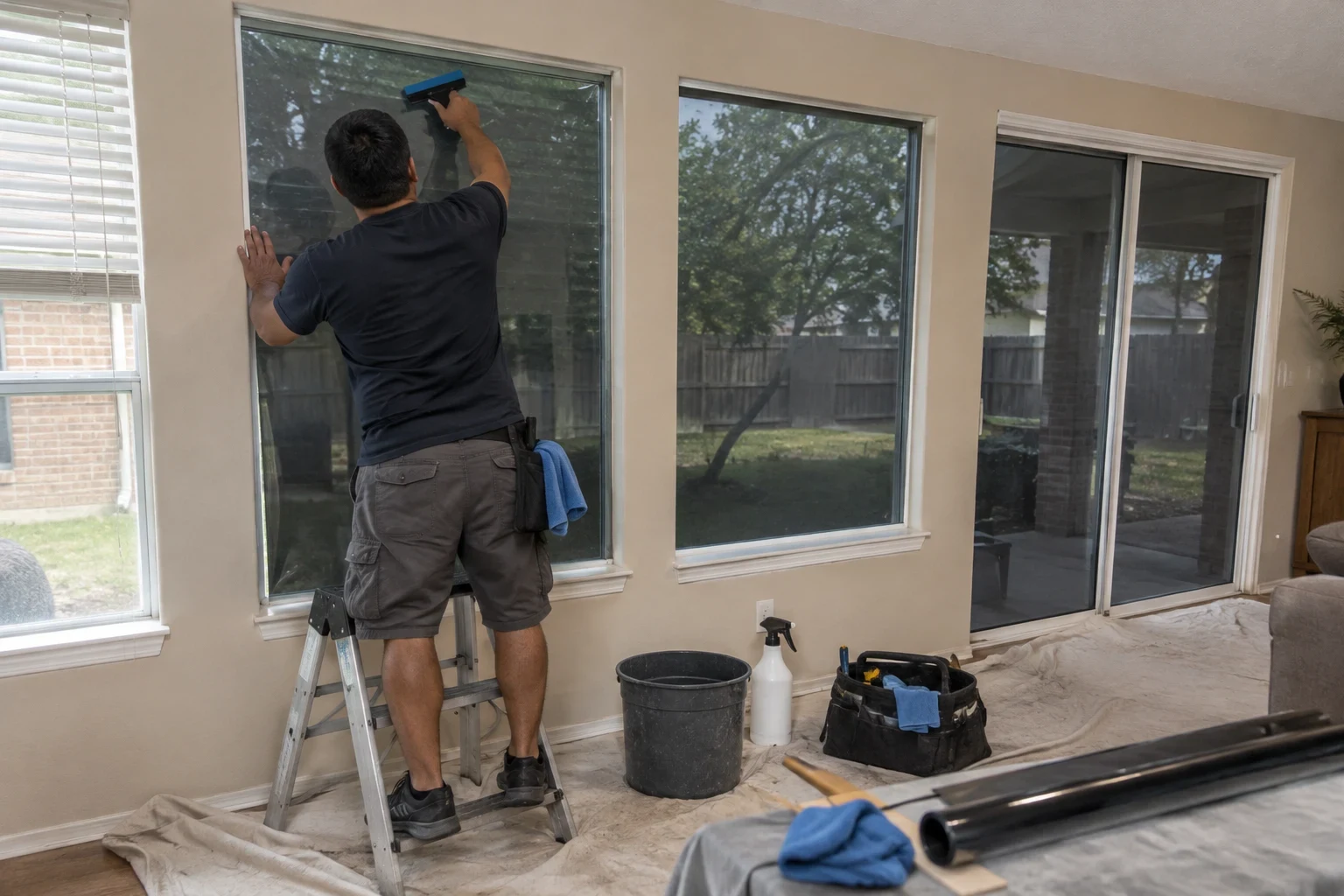
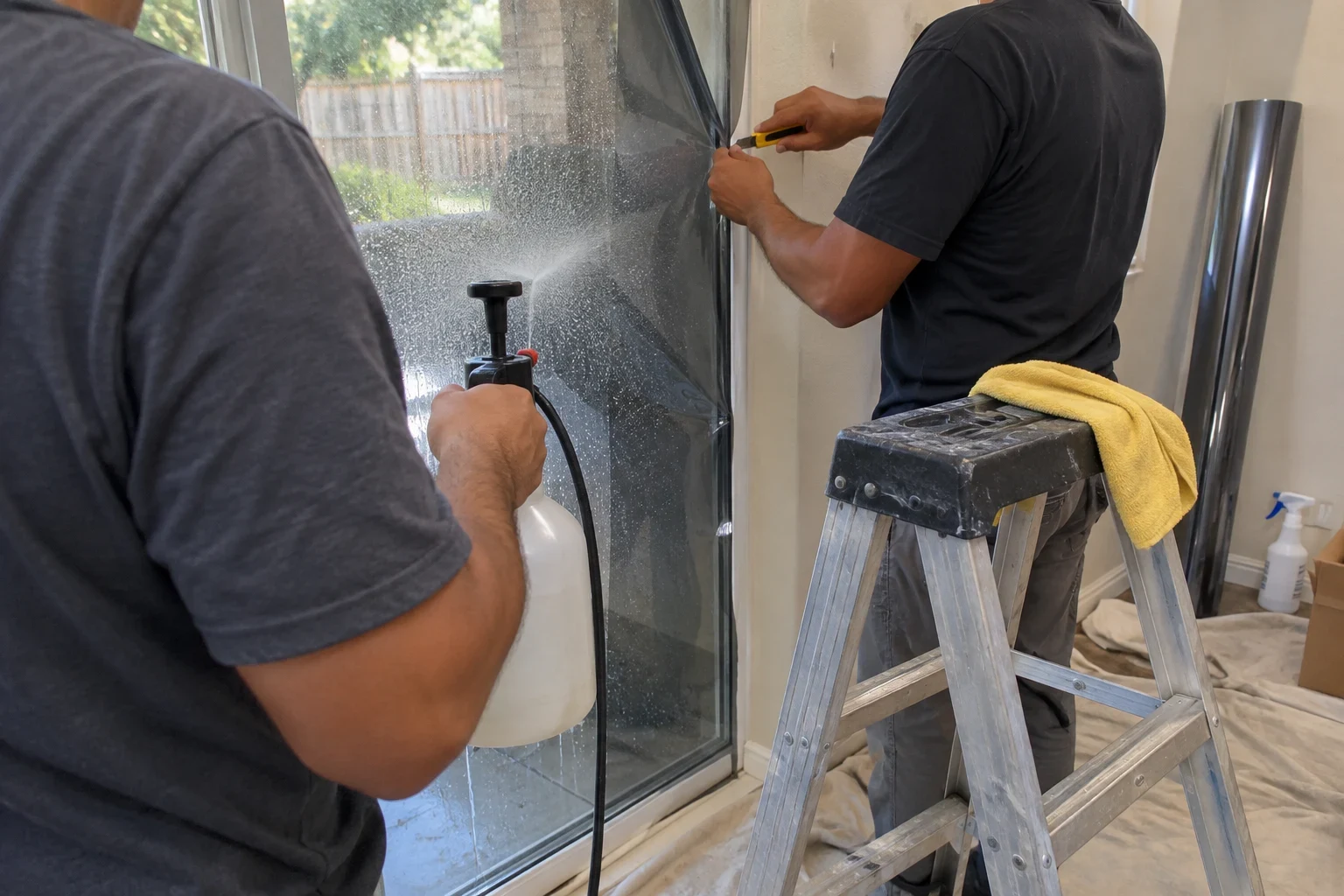
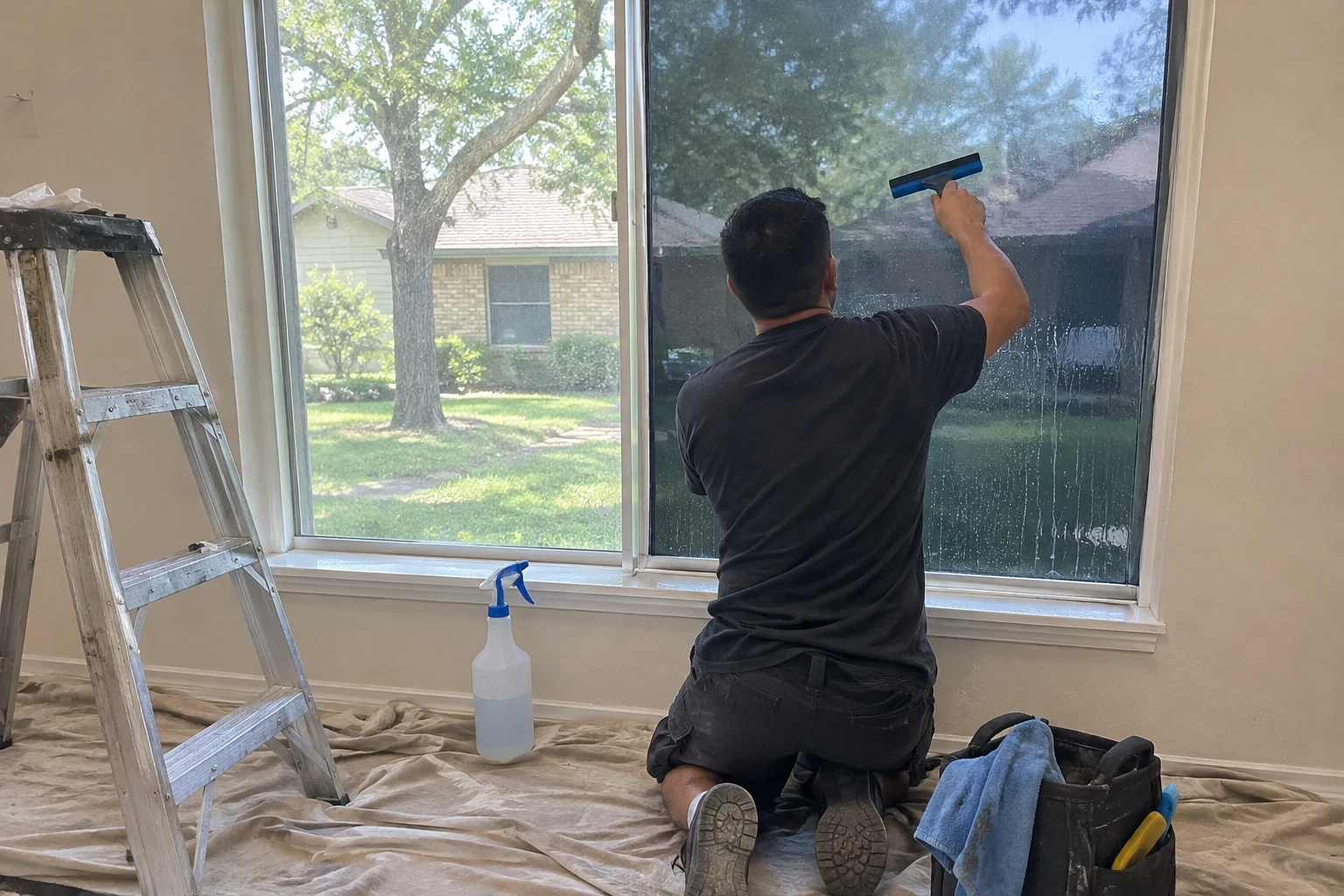
Drop cloths go down, small items come off the sills and every pane is cleaned well. The film is cut to size, squeegeed into place and trimmed to a tight edge.
- 4
Curing and cleanup
Fresh film may look a bit hazy for a few days as the water dries, more so in humid weather. We vacuum, wipe everything down and let you know when the glass is safe to clean.
Window Film for Homes, Offices and Storefronts
Our insured installers handle home window tinting for hot bedrooms and faded floors, plus commercial window tinting and office window tinting for glare on screens and heat at the front counter. We also fit privacy window tinting, security window film, decorative window tinting, ceramic window film, reflective and non-reflective window film, and turf protection window film for houses with artificial grass. That range comes from real work: our crews have completed 16,412+ commercial tint jobs, and the same habits go into every living room we film.
Home Window Tinting
Interior window film for houses that cools sunny rooms, cuts screen glare and slows fading, matched to your glass type and neighborhood rules.
Commercial Window Tinting
Window film for storefronts, shops and other commercial buildings that lowers heat and glare and is checked against your glass and building rules first.
Office Window Tinting
Window film for offices that tames monitor glare, cools sunny desks and gives meeting rooms privacy, installed around your work hours.
Privacy Window Tinting
Frosted, reflective and dual-reflective window film that keeps eyes out of bathrooms, bedrooms and front rooms while still letting daylight in.
Security Window Film
Clear film applied to the inside of your glass that keeps shattered panes together, slows forced entry and still lets the light in.
Decorative Window Tinting
Frosted, etched-look and patterned window film that softens light and adds privacy to bathrooms, entry glass and office partitions without replacing the glass.
Ceramic Window Film
Nano-ceramic film that rejects solar heat and UV while keeping your view clear and your phone and Wi-Fi signal strong.
Reflective Window Film
A metalized window film that bounces sunlight away before it heats the room, with daytime privacy and strong glare reduction.
Non-Reflective Window Film
Film that cuts heat, glare and UV while your windows keep the look of ordinary glass, a good fit where HOA rules limit mirrored finishes.
Turf Protection Film
A film that softens the concentrated reflection off energy-efficient windows so your artificial turf, siding and patio furniture stop scorching.
Where We Install Window Film
Our crews cover Baytown and the nearby towns, among them Channelview, La Porte, Mont Belvieu, Highlands and Beach City. We also go out to Barrett, Pasadena, Deer Park, Cloverleaf and Seabrook for homes, offices and storefronts.
- Baytown
- Channelview
- La Porte
- Mont Belvieu
- Highlands
- Beach City
- Barrett
- Pasadena
- Deer Park
- Cloverleaf
- Seabrook
Don't see your town? Ask on the phone, and we will tell you on the spot whether we can reach you.
Why Neighbors Choose Us for Window Film
Tinting seems easy until the wrong film cracks a pane or runs afoul of an HOA rule. This is how we avoid that.
- 01
We check the glass first
Under dark film, some dual-pane and low-E windows heat unevenly and can crack from thermal stress. We find out what glass you have before suggesting a film, and we say so plainly when a window is better left as it is.
- 02
Rules and approvals, explained
Most home tinting needs no city permit, and we tell you that. What often counts is an HOA limit on reflective exteriors, sign-off from a landlord or property manager, or fire and egress rules on commercial doors. We bring these up first so no film has to come off later.
- 03
Careful crews in your space
Our insured installers work inside your home or business, so we cover sills, floors and furniture, and we clear away trimmings and drips before leaving.
- 04
A long commercial track record
Our crews have finished 16,412+ commercial tint jobs. Years of storefronts and office towers show in the clean edges, tight gaps and flat film we leave on a single bedroom window as well.
- 05
An honest film recommendation
We recommend the film that solves your problem, not the most expensive one we stock. If a lighter ceramic film handles the heat and keeps the room bright, that is the one we suggest.
About Home Window Tinting Baytown
We are a local window film company that works inside homes and businesses around Baytown. Our customers usually call about the same few things: a west-facing room that is hard to live in by late afternoon, sun fading the floors, glare on office screens, or neighbors who can see straight in.
We fix those with the right film and a careful install. What sets us apart is the homework before the film goes on. We look at your glass, ask about your HOA, lease or building rules, and explain plainly whether any permit or approval applies. Most of the time none does, and we tell you that too.
- Insurance
- Insured installers
What Shapes the Price of Your Tint
We build each quote from your actual windows instead of a flat rate. Some things shift the total more than others, and we go over each one with you by phone and in writing.
Your free quote shows the film, the windows included and the labor on separate lines. If seeing the glass in person changes anything, we explain it before work begins.
- Square footage of glass
- Pricing follows the area of glass covered. Ten ordinary windows come in under a wall of tall living room glass or a whole storefront.
- The film you choose
- Basic dyed, ceramic, reflective and security films are built differently and priced differently. Ceramic film cuts heat with no mirror look, and security film is thicker and keeps broken glass in one piece.
- Access and window height
- Upstairs windows, transoms above doors and glass behind built-ins need ladders, staging or more time. Easy ground-floor panes are quick.
- Old film removal
- Purple or peeling film must be steamed and scraped away before new film can go on. The amount of leftover adhesive changes the labor.
- Glass condition and type
- Textured glass, scratches or failed seals can narrow down which films are safe. We check for these so you do not pay for film that will not last.
Questions We Hear Most
Is a permit needed to tint the windows on my house?
Usually not. Window film on a home is normally treated as a finish rather than a building change. The thing that may apply is an HOA rule about reflective or dark windows seen from outside, so look over your HOA guidelines and we will help you choose a film that meets them.
Could window film crack my glass?
It can when the wrong film meets the wrong glass. Dark or very absorbent film on some dual-pane or low-E windows can lead to thermal stress. That is why we identify your glass first and suggest only films that suit it.
Will tinted windows darken my rooms?
Not always. Ceramic and many non-reflective films block a lot of heat and UV and still let plenty of daylight through. We bring samples so you can compare them on your own windows before choosing.
Will window film actually cut my energy bills?
When film rejects solar heat, your air conditioner works less on sunny afternoons. The savings depend on how much sun reaches your windows and which film you choose. We will tell you honestly which rooms are worth filming and which are not.
How should I clean my windows once the film is on?
Let the film cure for a few days before washing the glass. From then on, mild soapy water with a soft cloth or rubber squeegee does the job. Avoid ammonia cleaners and anything abrasive, since they can scratch or cloud the film over time.
How long does an install take?
Most homes take from a few hours to a day, based on the number of windows and how high they sit. Offices and storefronts can usually be booked before or after business hours so staff and customers are not disturbed.
What about leased spaces and commercial buildings?
Commercial jobs may involve landlord approval, building rules on how the outside looks and fire code limits near exit doors. We raise these early and can speak with your property manager so the install is approved before we begin.
Ready for Cooler, Calmer Rooms
Tell us which windows are bothering you and we will walk you through the film options, the glass check and any rules that apply. Your quote costs nothing.