ServicesHome Window Tinting
Home Window Tinting in Baytown
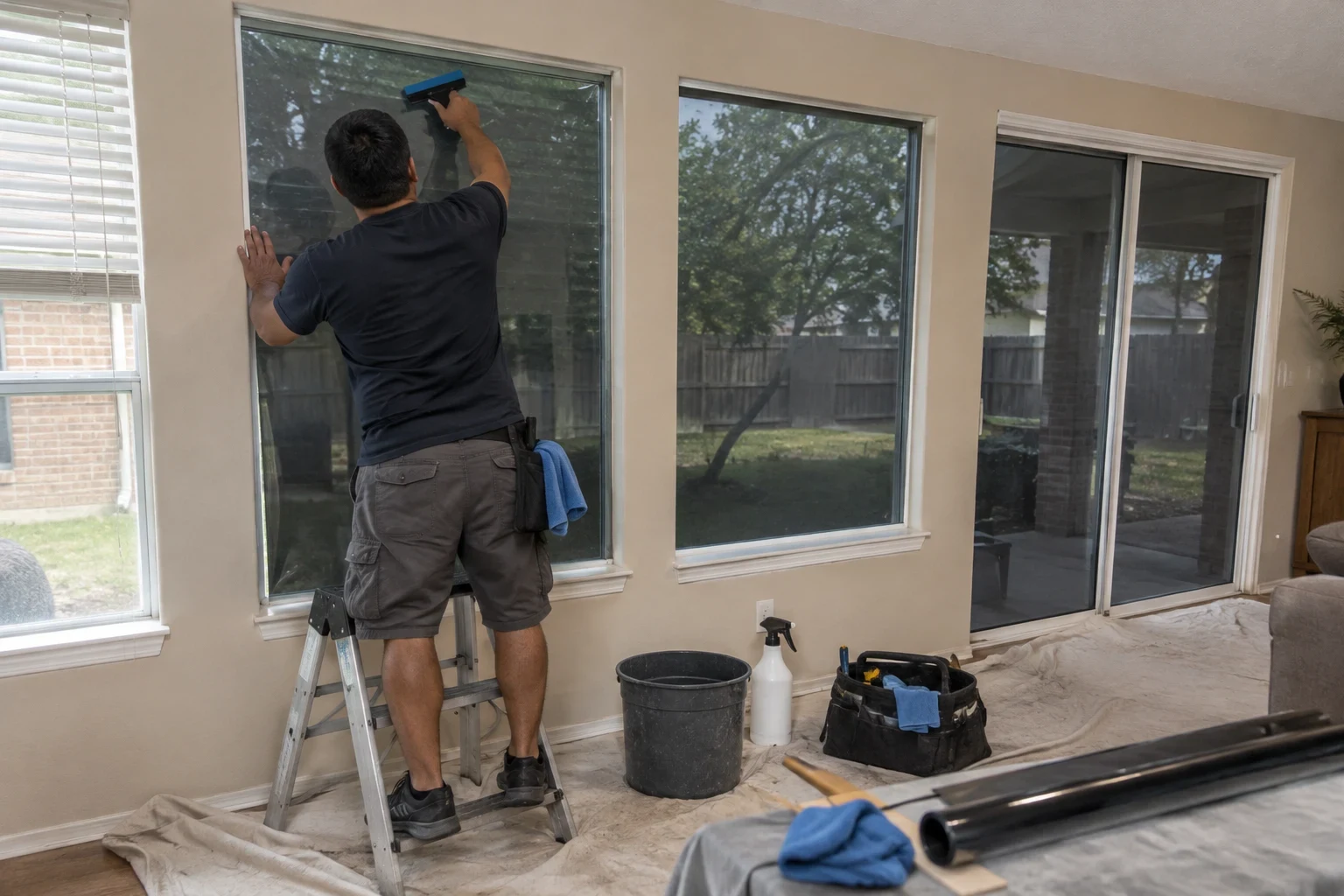
Film goes on the inside of your glass to block heat, glare and the UV that fades furniture, and your view stays open. We look at your window type and your HOA rules before we start, so the film is safe for the glass and fits what your neighborhood allows.
How home window film helps, and when to use it
Window film is a thin sheet bonded to the inside of the glass. The right one stops most UV, turns back a fair amount of the sun's heat and takes the edge off glare, and no window has to be replaced. When a room or two gets baked each afternoon, or the floor by the patio door keeps fading, film is often the easiest answer.
A common question is whether a permit is needed. For interior film on a house, a city building permit usually isn't, but there is more to check. Plenty of HOAs and deed restrictions control how windows look from the street, mirror-like film most of all, and some window makers set terms for film on their glass. We walk through both with you in plain words before you pick a film.
The glass gets a close look too. Dual-pane, low-E and large fixed windows can hold heat, and a poorly chosen film can put more strain on them. Pairing the film to the glass is the step nobody sees once the job is done, and it is the one that counts most.
What a home tint job covers
- 01
Checking each window's glass
For every window we record whether it is single-pane, dual-pane, tempered or low-E, plus its size and how much sun it gets. That shows us which films that glass can safely carry.
- 02
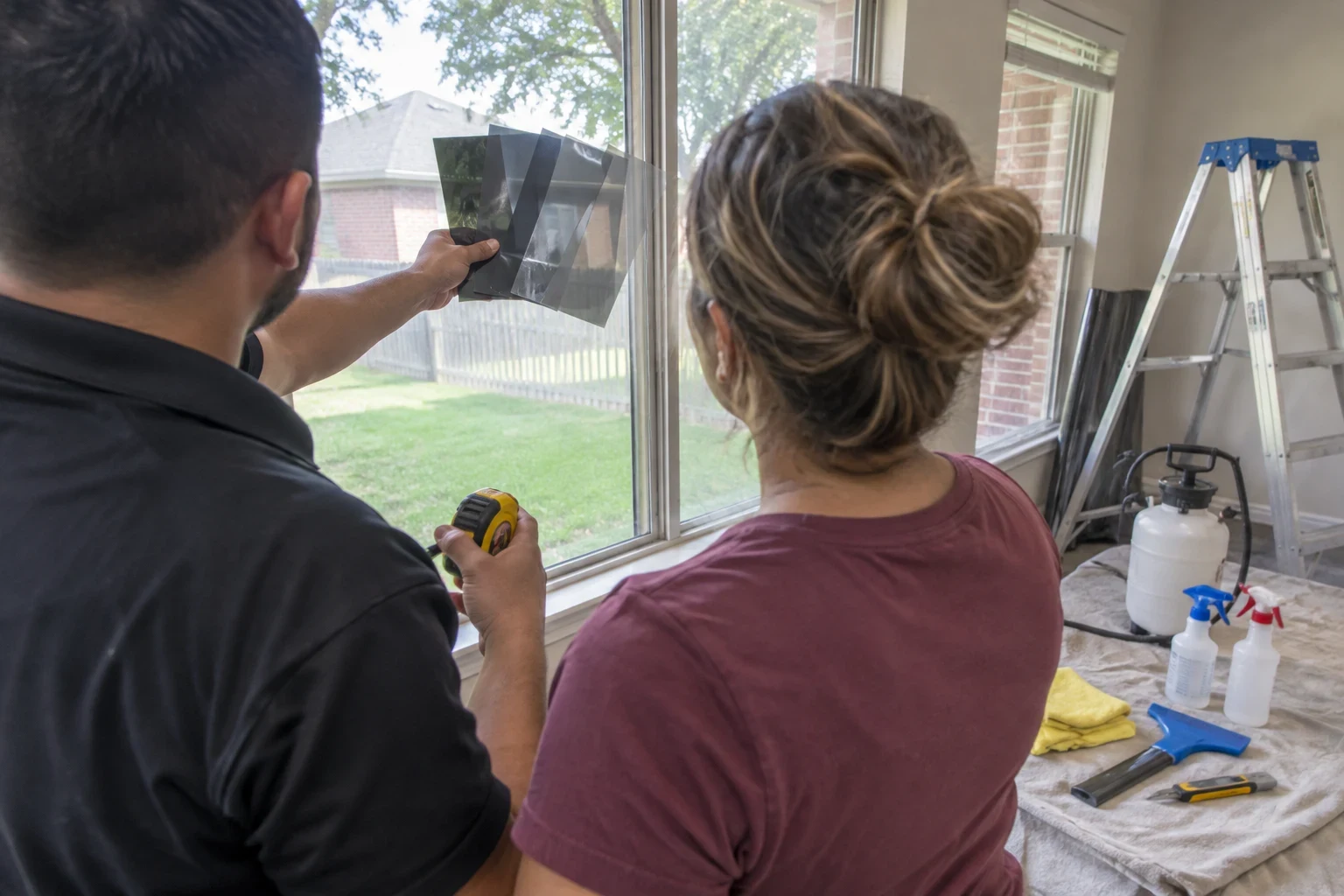
Samples you see on your own glass
You can press our samples against your windows and judge them yourself. Ceramic or non-reflective film is what most homes choose, and we'll tell you where reflective window film is a good fit and where it isn't.
- 03
A look at HOA rules and street appearance
If an HOA covers your home, we go over how the film will look from the street. You're welcome to show the sample to your board before you decide.
- 04
Thorough prep and a careful install
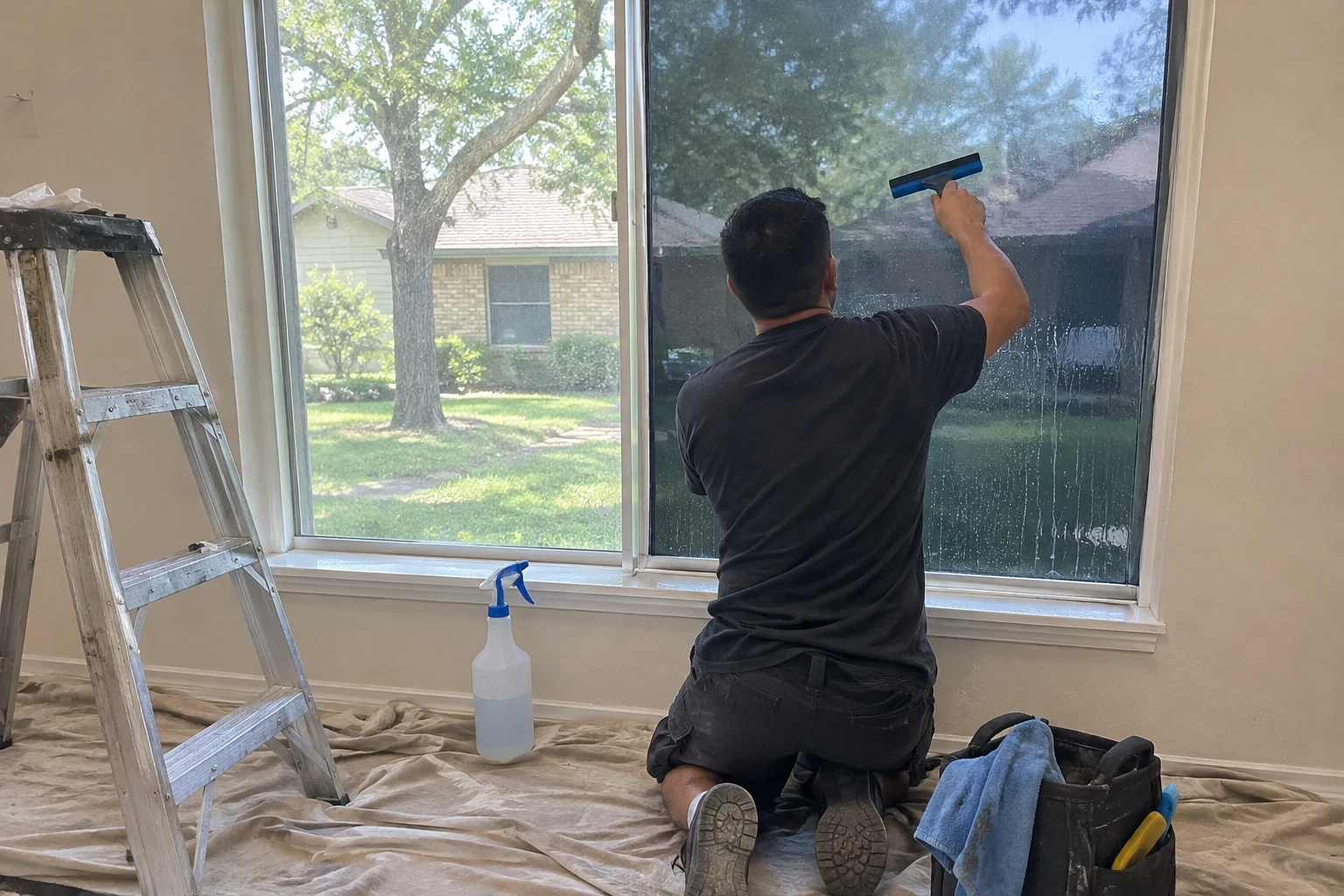
Each pane is cleaned, the film is trimmed tight to the frame edges, and water and air are pressed out with a squeegee. We move and cover furniture by the windows and lay drop cloths on the floor.
- 05
Cleanup and care tips
Before leaving, we pick up our scraps and wipe the sills. We also explain how to clean filmed glass and what to expect during curing.
Questions about Home Window Tinting?
Call(281) 843-4500Signs your home could use window film
Rooms that stay hot after sunset
West-facing bedrooms and living rooms soak up afternoon sun and hold it. Heat rejection film reduces how much of that energy gets through the glass.
Fading floors, rugs or furniture
UV is a main cause of fading. Quality film blocks the vast majority of it, which slows the damage noticeably.
Glare on the TV or work screen
If you close blinds just to see a screen, film can soften the glare and let you keep the light.
The AC rarely gets a break
Long Gulf Coast summers keep the system working hard on sunny walls. Film can trim the solar heat load and help with energy savings.
Neighbors can see right in
For street-facing rooms or bathrooms, our privacy window tinting page covers films that let light in while blocking the view.
The job from first call to finish
- 1
Call us for a free quote
Let us know which rooms are a problem and at what time of day. We'll book a visit to see the windows.
- 2
A home visit with samples
We look at the glass, take measurements and hold samples up to your real windows. We also point out any HOA or window maker questions worth settling first.
- 3
Your quote in writing
The quote names each window, the film picked for it and everything included. You don't have to decide on the spot.
- 4
The day we install
Depending on how many windows you have, most homes take from a few hours to a day. We finish one room before moving on, so you can keep using the rest of the house.
- 5
Drying time and follow-up
For a few days to a few weeks the film may look a little cloudy or hold small water pockets as it dries. That's expected, and we'll tell you what to keep an eye on.
What sets the price of home window tinting
No two houses are alike, so we base the price on what we find at your windows. The quote shows what goes into the total, and nothing is added once you've said yes.
- How many windows, and how big
- The square footage of glass matters most. Sliding doors and picture windows take more film than small bedroom windows.
- The film you pick
- Ceramic film tends to cost more than standard dyed or metallic film, since it blocks heat well without a dark or mirrored look.
- Getting to the glass
- Second-story panes, high transoms and stairwell glass call for ladders and more time.
- Existing film and the state of the glass
- Stripping bubbled or peeling film and its glue takes extra labor. Panes that are scratched or damaged may need work first.
Questions about tinting home windows
Is a permit required to tint the windows on my house?
Usually not. A city building permit generally isn't needed for interior film on a home. What matters more is often your HOA or deed restrictions, which may limit dark or reflective films. We'll help you sort that out before we install.
Does film void the warranty on my windows?
That depends on who made them. Some window warranties carry conditions about added film. We'll look at the windows, and if you can find the paperwork, we'll read through it with you so you decide knowing the facts.
Can film go on dual-pane or low-E windows safely?
Yes, when the film is the right one. Some films take on too much heat for certain insulated glass and can add strain, which is why we check each window type before suggesting a film.
Will the film make my rooms dark?
Only if that's what you're after. Plenty of films are nearly clear and still stop most UV and a good amount of heat. You'll see samples on your own windows before choosing.
When can I wash the windows?
Let the film cure before you clean the inside of the glass, and we'll give you the timing for the film you chose. From then on, a soft cloth and a mild cleaner with no ammonia are enough.
Find out which film fits your windows
We'll look at your glass, show you real samples and answer the HOA and window questions plainly. You decide from there.