ServicesOffice Window Tinting
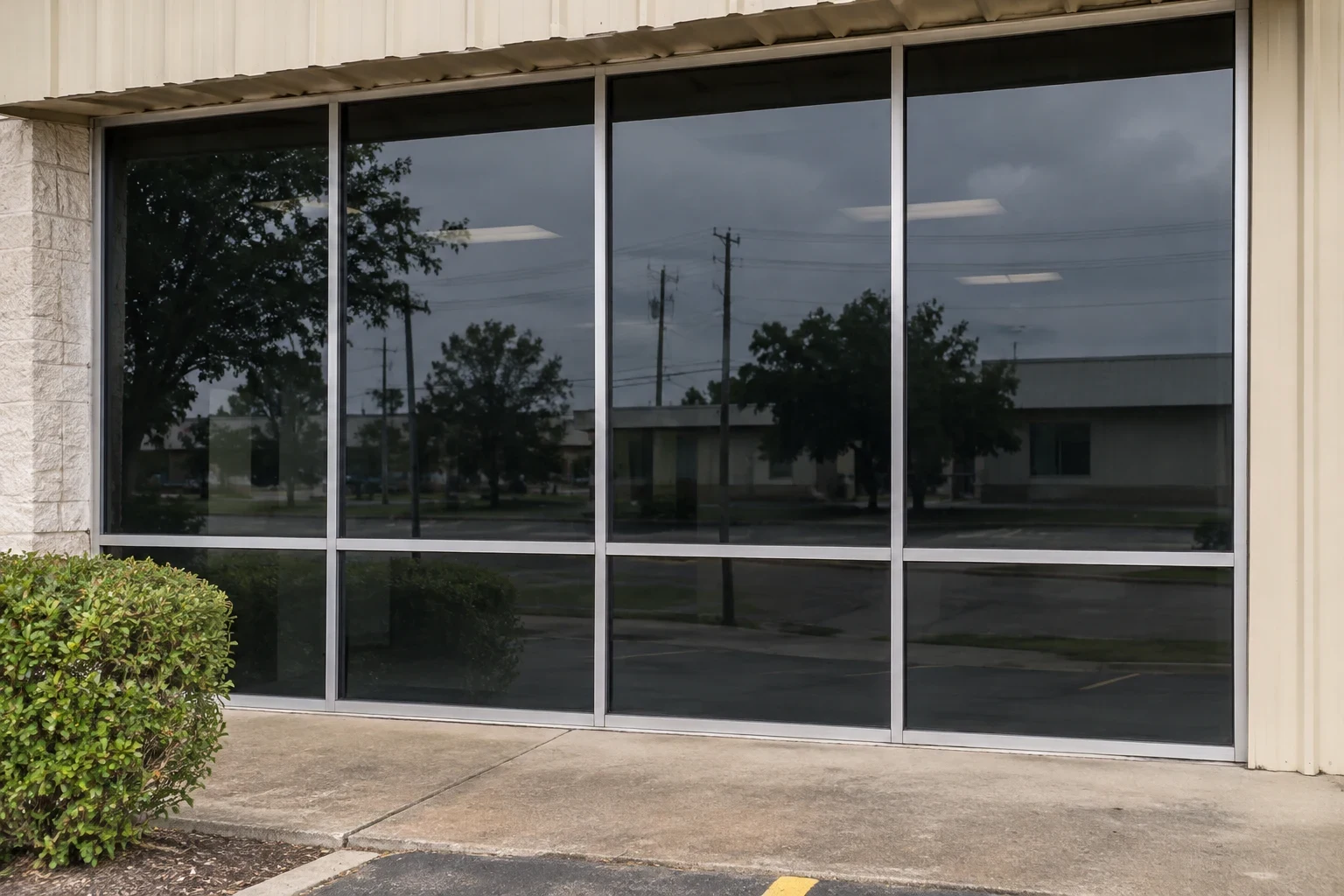
Window Tinting for Baytown Offices
Our office window film keeps screens readable, keeps desks by the glass comfortable all afternoon and gives meeting rooms real privacy. We confirm your lease and building rules before installing, then work around your schedule so your day is not interrupted.
Window film built for the workday
Office glass causes a few predictable problems. Afternoon sun washes out monitors, the desks along the windows run hot while the interior stays cold, and anyone walking past can see into the room where you hold interviews. Office window tinting handles all of that with a thin film applied to the inside of the glass, with no new windows and no construction.
We also take care of the paperwork side before we quote. Interior window film rarely needs a city permit, but many leases and building managers have rules about how the glass looks from outside, and some insulated or tempered glass has limits on which films are safe to use. We sort those questions out first, so you are not hearing from your landlord after the install.
Larger jobs, like a full storefront or a multi-tenant building, are covered on our commercial window tinting page.
What our office tinting work covers
- Glare control for screens
- We pick a film that cuts glare on monitors and video calls without making the room feel like a cave. Your team can open the blinds again.
- Heat rejection on sunny walls
- Ceramic film blocks much of the sun's heat while keeping a clear view out. On long Gulf Coast afternoons, that helps even out the hot and cold zones that fight over one thermostat.
- Privacy for meeting rooms
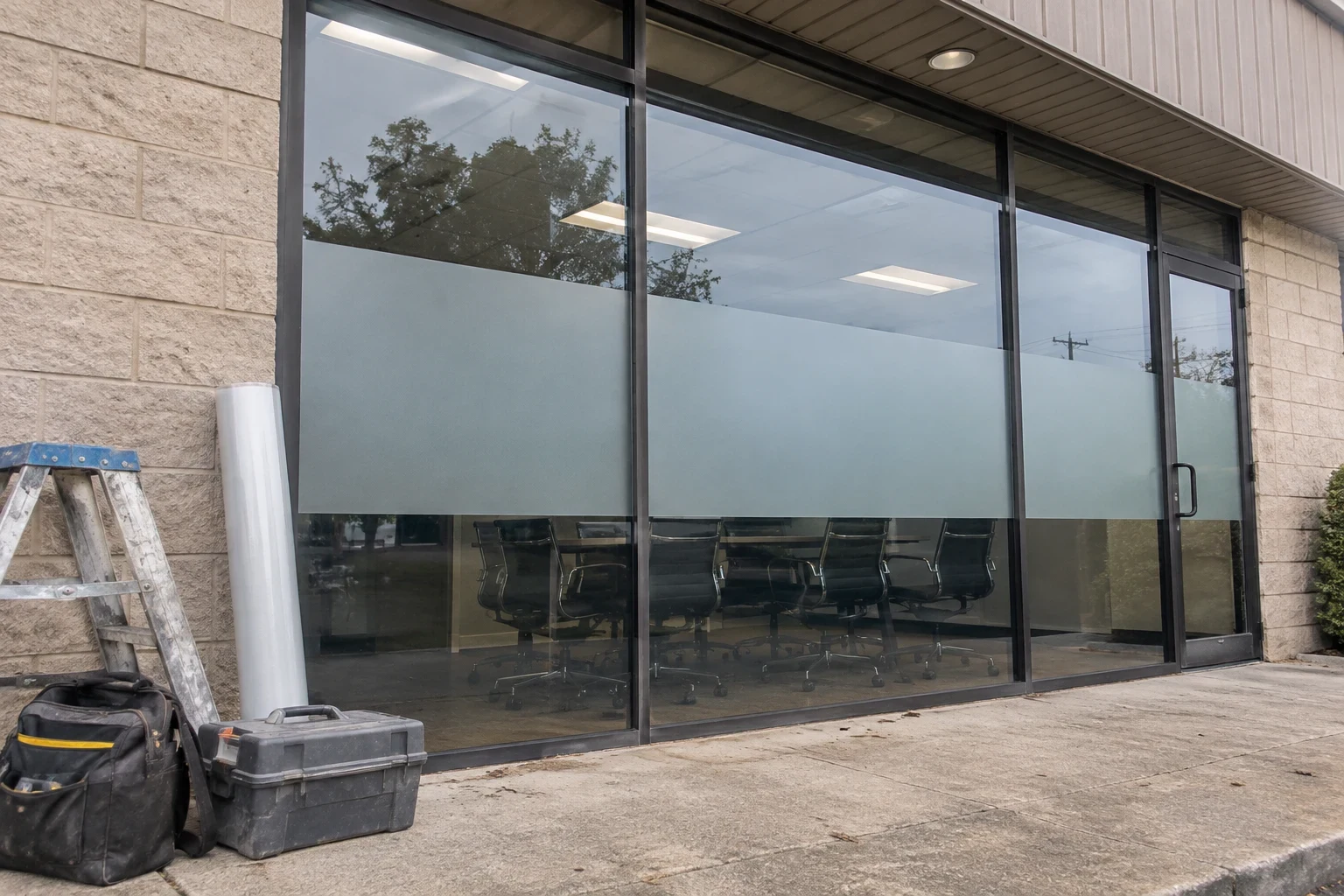
- Frosted or decorative film works on glass partitions and conference room walls. For exterior windows, we can show you daytime privacy films and explain how each one behaves after dark.
- UV protection for furnishings
- The films we install block most UV rays, which slows the fading of carpet, chairs, artwork and paperwork near the windows.
- Lease, code and glass checks
- Before ordering film, we confirm what your building allows, look for safety glazing labels and check the glass type against the film maker's guidance. Your recommendation comes in writing.
Signs your office is ready for window film
The blinds never open
If the shades stay down all day just to see a screen, you are paying for windows you never use.
Monitors keep moving
Staff angling screens, squinting or sitting with their backs to the glass is a glare problem film can fix.
One side of the room is always hot
Desks by sunny windows that need a fan while others need a sweater point to solar heat coming through the glass.
Your meeting room is on display
Glass conference rooms look great until a confidential review or a hiring conversation happens in full view of the hallway.
Furniture near the glass is fading
Bleached upholstery or curling papers on a sill mean UV is doing slow damage every day.
What sets the price of office tinting
We price each office from its own measurements and goals. Your written quote lists the film, the square footage and any added work, so you know what you are paying for before we schedule anything.
How much glass and how many panes
More square footage takes more film and labor, and lots of small panes take longer than a few big ones with the same total area.
Which film
Ceramic, reflective and decorative privacy films each carry a different price. We pick the film that fits the problem rather than the costliest one.
Reach and furniture
Tall clerestory windows, glass behind fixed cabinets and panes that need a ladder or lift take extra time.
Stripping old film
Peeling or bubbled film must be removed and its adhesive cleaned off before the new film goes up.
Working after hours
Evening or weekend installs keep your office open and can change the quote, so we settle timing early.
Steps in an office install
- 1
Free quote over the phone
Describe the problem and about how many windows there are. We book a time to see the space, measure and go over film choices.
- 2
Checking the building and glass
We look at your lease or building rules on exterior appearance and get approval details before ordering. We also note tempered, dual-pane or labeled glass so the film suits it.
- 3
Working around your hours
Installs can happen early, in the evening or on weekends, one room at a time, so most of the office stays in use.
- 4
Install day
Desks and floors near the windows get covered, each pane is cleaned thoroughly, and the film is applied and trimmed tight. Slight haze or a few water spots are normal while it cures, and we tell you how long to wait before cleaning.
- 5
Walkthrough and care tips
We go through the space with you, mention what to watch during curing and leave easy cleaning steps for your janitorial staff.
Common office tinting questions
Does tinting our office windows need a permit?
Usually not. Interior film is not a structural change, so a city permit is rarely required. The bigger step is often your lease or building management, which may control how the windows look from outside. We help you get that approval before any film is ordered.
Will film make the office too dark?
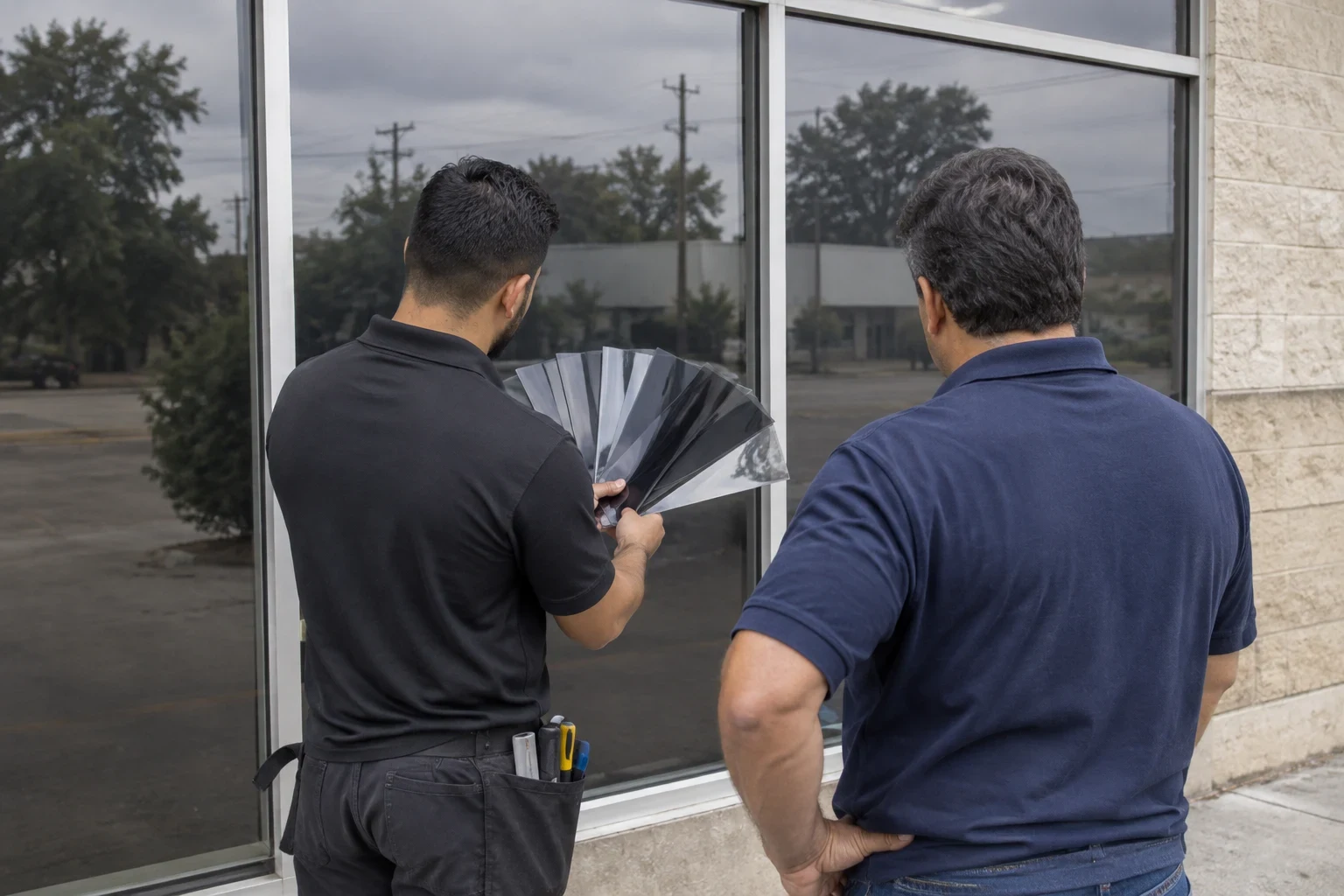
Not if the right one is chosen. Many ceramic and non-reflective films reduce heat and glare while keeping the view and daylight. You see samples on your own glass before you decide.
Can you work while we stay open?
Yes. We plan around your hours, go one room at a time and keep our gear contained, so most staff keep working elsewhere in the office.
Is film safe on dual-pane office windows?
Certain films can add heat stress to some insulated or tinted glass, so we check the glass type first. We recommend only films rated for your glass and explain when one is a poor match.
Can people see in after dark?
With most daytime privacy films, yes, once it is dark outside and the lights are on inside. For evening privacy too, frosted or decorative film is the better pick. We show you both on your own windows so you can compare.
Want a more comfortable office?
Let us know which rooms run too hot, too bright or too open to view. We will check the glass and your building rules and go over your options.