ServicesReflective Window Film
Reflective Window Film in Baytown
Reflective window film turns a big part of the sun's heat back outdoors before it gets into your rooms. We look at your glass, your HOA rules and any local requirements first, then put up film that cools the room without creating problems down the road.
How reflective film works and where it belongs
A thin metalized layer in reflective film works like a mirror facing the sun. No other film we install blocks as much heat and glare, and it gives you privacy by day, because people outside see their reflection instead of your living room.
It suits windows that take hard afternoon sun, rooms that stay warm no matter where the thermostat sits, and offices where screens wash out by mid-afternoon. On west-facing Gulf Coast glass, it often makes a bigger difference to the room than any other film.
It isn't right for every window. The mirror look shows from the street, some neighborhoods restrict it, and some glass shouldn't carry a film that gets this hot. If you'd like a gentler look, we'll point you to ceramic window film or non-reflective window film and explain why.
What a reflective film job covers
We start with the glass
We note whether each window is single-pane, dual-pane, low-E or tempered. Reflective film makes the glass run hotter, so we choose a film that glass can safely handle.
A check of rules and restrictions
We ask about HOA or deed restrictions and, for businesses, the building owner's rules on exterior appearance. Film rarely needs a city permit, but if yours does, we tell you plainly and handle it before work starts.
Samples on your own glass
We hold sample pieces against your windows so you can see the reflection from inside and from the street. Light and dark grades look very different in person.
A tidy, careful install
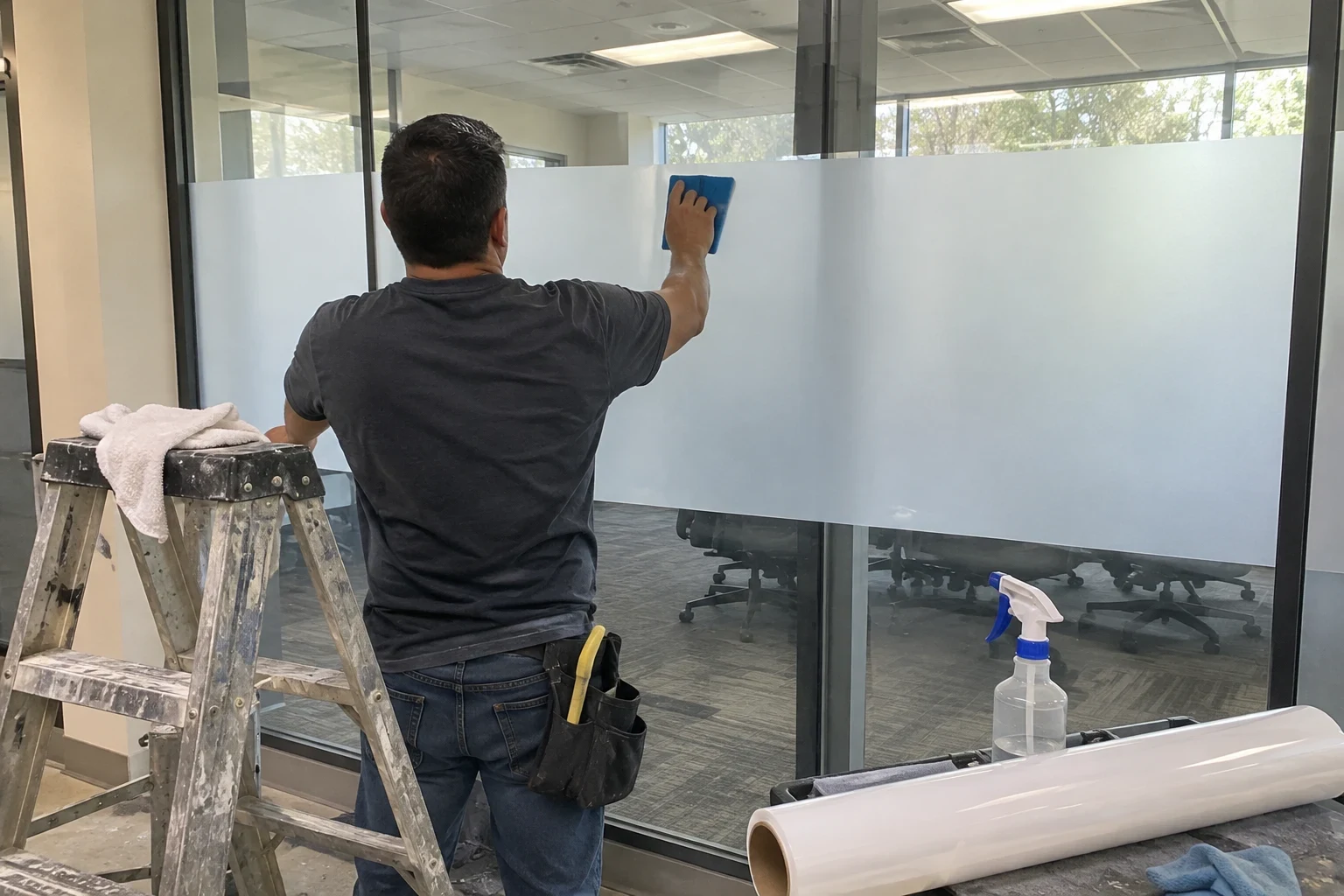
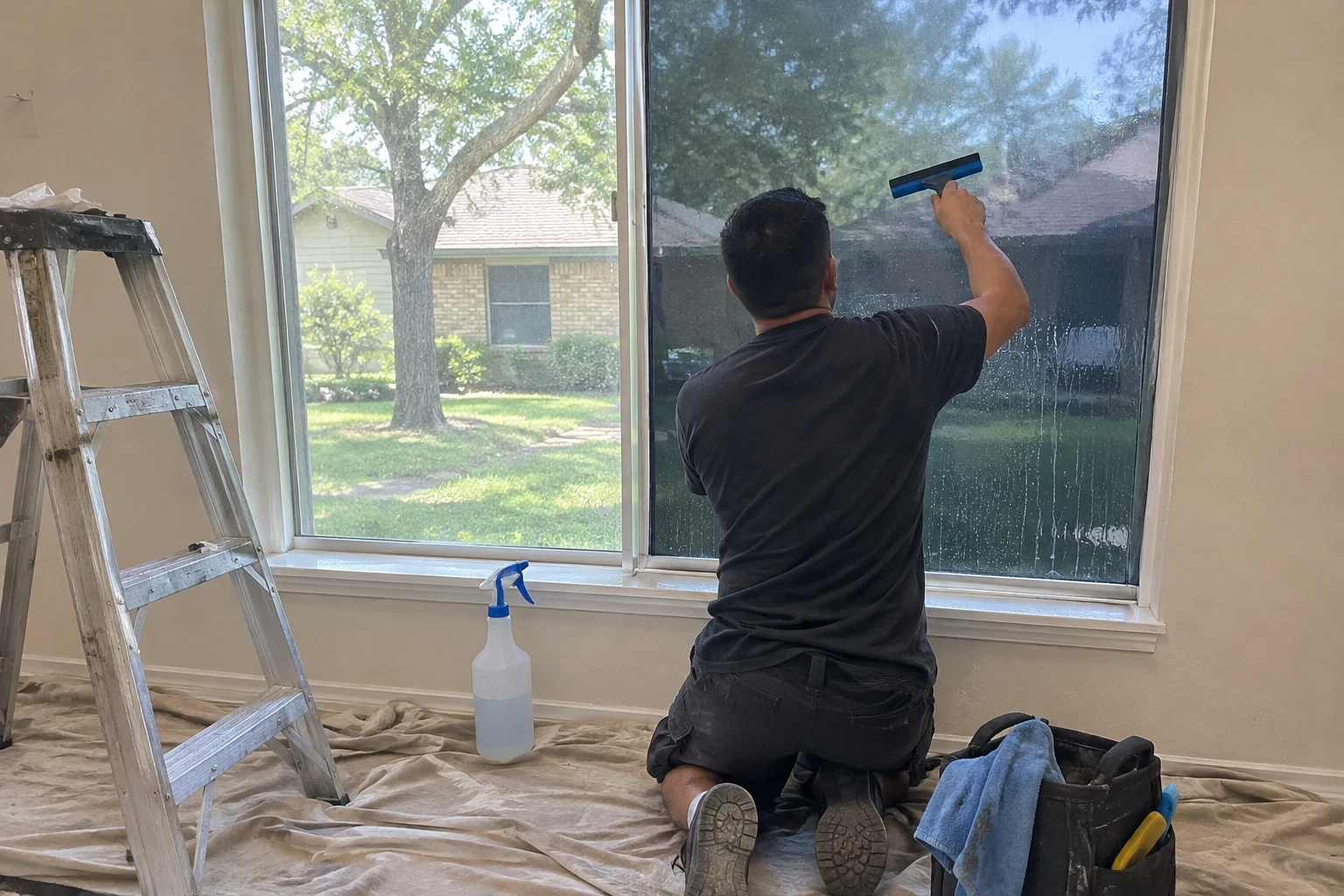
We cover sills and floors, clean every pane, cut the film to size and squeegee out the water and air. Old, peeling film is removed first.
Final walk and care tips
Before we go, we show you the finished windows and explain the curing period and how to clean the film without scratching it.
Signs reflective film is worth a look
One room is always the hot room
When a bedroom or office sits several degrees warmer than the rest of the place each afternoon, sunlight through the glass is the usual reason.
Glare on screens and floors
Hard reflections on TVs and monitors, or squinting at your desk, mean more light is getting in than you need.
Furniture and floors fading
Rugs, cabinets and upholstery bleached near the windows point to steady UV exposure. Reflective film blocks most of that UV along with the heat.
Blinds closed all day
If the shades stay down only so the room stays bearable, film lets you raise them and enjoy the view.
Street-level windows feel exposed
Reflective film gives you privacy by day with no curtains, a good match for ground-floor rooms and storefront offices.
The job from first call to finish
- 1
Call for a free quote
Describe the windows, the rooms and what bothers you most. We set a time to look at the glass in person.
- 2
A visit with samples
We check the glass, measure, ask about HOA or building rules and show you samples. The written estimate names each window and the film chosen for it.
- 3
The install
We protect the area, clean the glass and apply the film. Most homes take a few hours, and you can stay home the whole time.
- 4
Drying time and follow-up
While it cures, the film can look slightly cloudy or hold small water pockets for a few days to a few weeks. It clears up on its own, and we tell you what to expect so it doesn't worry you.
What moves the price
We price reflective film by window and by square foot, so two homes with the same window count can land at different totals. Once we have seen the glass, you get a written estimate with each item spelled out, so nothing new appears later.
- Total glass area
- Picture windows and sliding doors take more film than small bedroom windows. Most of the cost follows the square footage.
- Film grade and reflectivity
- Dual-reflective and higher-performance films cost more than basic grades. We tell you what the extra money buys.
- Access and height
- Upstairs windows, transoms and glass behind built-ins take longer and can call for ladders or scaffolding.
- Removing old film
- Bubbled or peeling film must be stripped and its adhesive cleaned off before the new film can go up.
- Glass that needs a specific film
- Low-E or dual-pane windows may need a film made for that glass, and that can shift the price.
Reflective film questions we hear most
Something not covered here? (281) 843-4500
Will people on the street see mirrored windows?
In daylight, somewhat, yes. The strength of the mirror look depends on the grade you pick. We show you samples from outside so you can choose before any film is applied.
Does the privacy last after dark?
No. Reflective film only works while it is brighter outside than in. At night with your lights on, people can see in, so bedrooms and bathrooms still need blinds or curtains after dark.
Is a permit or HOA sign-off required?
A city permit is rarely needed for film on a home, but plenty of HOAs and deed restrictions limit reflective finishes. We ask about your rules first. If your HOA has to approve the film, we hand you the product specs at our visit so you can bring them to the board before we book the install.
Could reflective film crack a window?
On the wrong glass it can, since the film makes the pane soak up more heat. So we identify your glass first and pick a film that suits it. If your windows are a poor match, we tell you and offer a safer film.
Will my rooms turn dark?
They will be dimmer, but the lighter reflective grades still let in a good amount of daylight. If natural light is your top concern, we can set options next to each other on your windows.
Find out if reflective film suits your windows
We will look at your glass, check any rules that apply and show you real samples. You get a straight answer and a written estimate.