ServicesPrivacy Window Tinting
Privacy Window Tinting in Baytown
Our privacy film keeps people from seeing into your rooms and still lets the daylight in. We pick the film for each window and for the hours you want privacy, and we explain honestly what every option will and won't do.
Privacy matched to the way you use each room
Privacy film comes in more than one kind. In daylight, reflective film makes the outside of the glass act like a mirror, so people passing by see themselves instead of your room. That only works while it is brighter outdoors than indoors. Once night falls and your lights are on, the balance reverses and people can see inside.
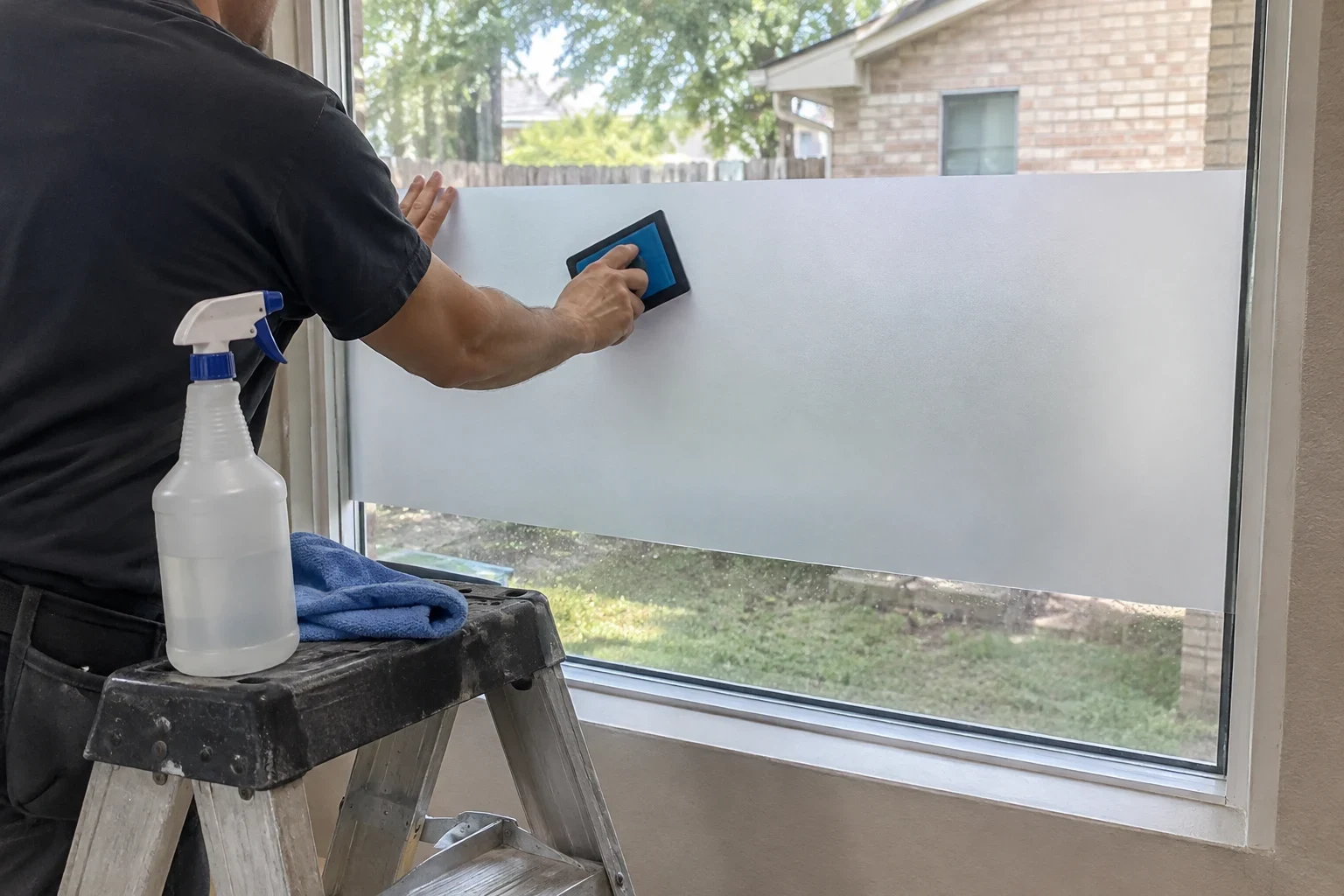
Rooms that need privacy around the clock, like a bathroom or a street-facing bedroom, get frosted or opaque film instead. It turns incoming light into a soft, even glow and blocks a clear view however bright it is outside. A lot of homes use both: reflective film on the large living room windows and frosted film on the bathroom and the front door sidelights.
Reflective privacy film also cuts a fair share of the heat and glare through west-facing glass on a Baytown summer afternoon, so the room you wanted to shield often ends up more comfortable as well.
What a privacy tint job covers
Going room by room together
We check every window with you, ask when the room is used and who can see in, and suggest a film for each. Windows that don't need film stay off the list.
Checking the glass before deciding
We record whether each pane is single pane, dual pane, tempered or low-E coated. Some darker or reflective films take on enough heat to strain certain glass, so we follow the film maker's guidance on glass and point you to a safe film when a window is a poor fit.
Straight talk on the rules
A building permit usually isn't needed for interior film on a house. Your HOA may still limit mirrored glass that shows from the street, so we mention it and suggest you check before picking a highly reflective film.
Clean glass and neat edges
Each pane is cleaned well, the film is trimmed to sit just inside the frame, and the water is pressed out so the edges stay flat.
Covered floors and a tidy finish
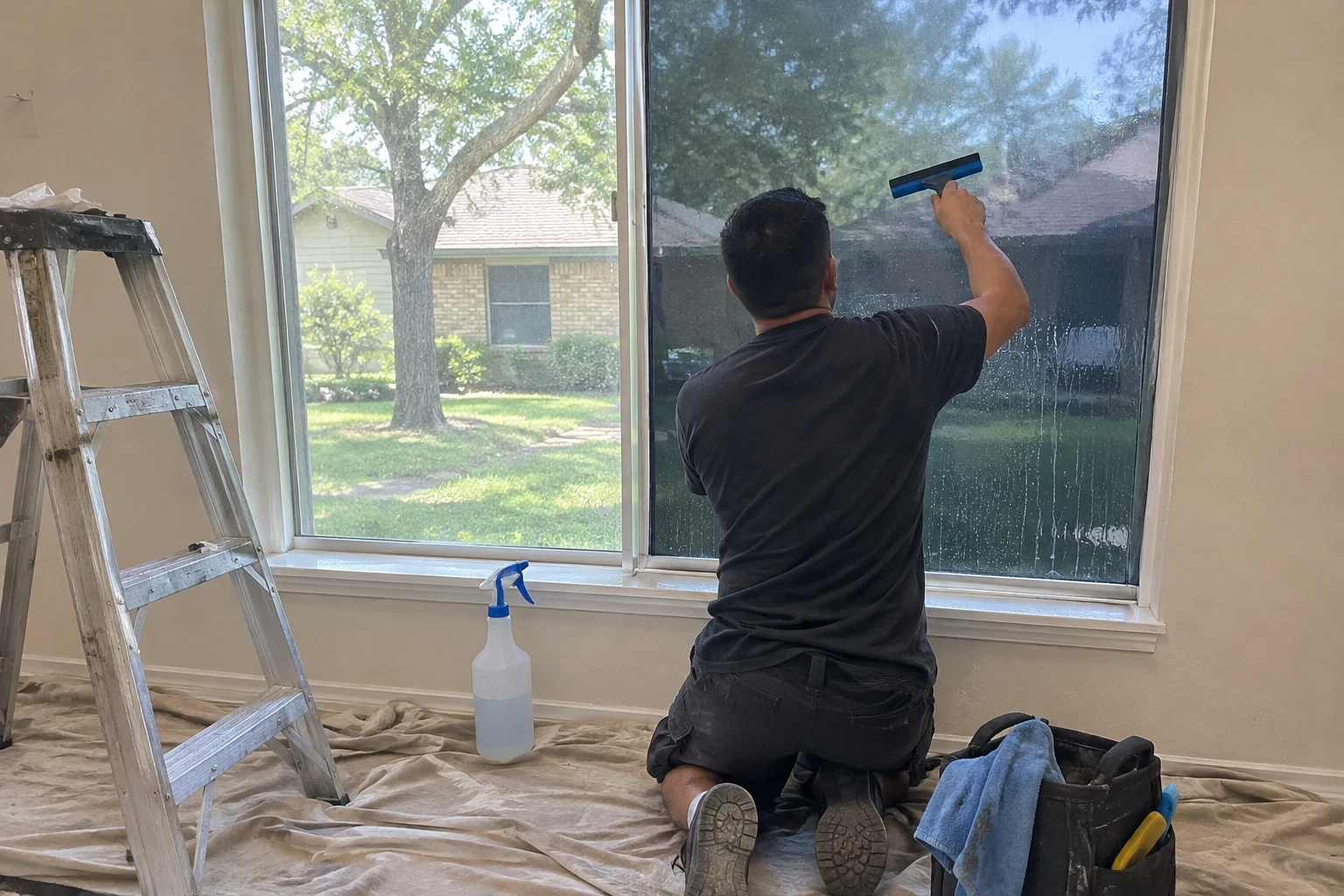
Drop cloths go under each window, small items come off the sills once you say it's fine, and we leave with every scrap and piece of backing paper.
When privacy film is a good choice
The blinds stay closed from morning to night
If shutting everything is the only way to feel unseen, film lets you raise the blinds and stay private.
A neighbor can see into your bathroom
Frosted film keeps the bathroom private at night with no curtains to get damp and grow mold.
The sidelights by your front door show the whole hallway
Anyone on the porch can tell who's home and what's inside. Frosted or patterned film on the sidelights blocks that view and keeps the entry bright.
A new house or fence next door changed your view
An upstairs window next door now looks right into your living room or the rooms facing your yard.
The view in also lets in heat and glare
Glass facing the street that shows your rooms often brings in plenty of sun as well. Reflective film takes care of both.
What the day looks like
- 1
You call us
Let us know which rooms feel exposed and at what times. We book a visit and give you a free quote at your home.
- 2
Samples on your windows
We press film samples to your real glass in daylight so you can judge the look from inside and out. Your written quote lists every window.
- 3
Putting the film on
Most homes are done in a few hours. We work from the inside, a window at a time, so the rest of the house stays usable.
- 4
Drying time and a final look
In the first days the film may look a bit cloudy or hold small water pockets while it dries. We show you what's normal, explain how to clean it and ask you to wait about a week before washing the inside of the glass.
What changes the price
The price comes down to how much glass you have and the film each window calls for. We measure every one and give you an itemized quote, so you can see each cost and leave windows out if you choose.
- How much glass
- More windows, or bigger ones, take more film and more time.
- Which film
- Frosted, standard reflective and dual-reflective films each carry their own price. Dual-reflective film looks less like a mirror from inside, which some people like better.
- Reach and window shape
- Transoms, tall stairwell glass and arched or divided-light windows need ladders and more trimming.
- Stripping old film
- Bubbled or peeling film must be taken off and its glue cleaned away before the new film is applied.
Common privacy film questions
Something not covered here? (281) 843-4500
Can people see inside after dark?
With reflective film they can, once it's dark out and your lights are on. Every one-way mirror film works that way. For privacy at night, we put frosted film on those windows or suggest adding light curtains behind reflective film.
Is a permit needed for privacy film on my windows?
Interior film on a house generally doesn't need a building permit, because nothing structural or electrical is touched. HOA rules come up more often, mostly for mirrored film that shows from the street. We're happy to go over the choices so you can ask your HOA first.
Does privacy film darken a room?
Frosted film lets most daylight in, only without a clear view. Reflective film dims the room somewhat, depending on the shade. We put samples on your own windows so nothing surprises you.
Does it work on dual-pane windows?
In most cases, yes. Certain reflective and darker films can trap heat in some dual-pane or low-E glass, so we check the glass and choose a film rated for it.
Can the film come off later?
Yes. Privacy film can be removed without harming the glass, which is handy if you move or want something different.
Ready to raise the blinds again
Let us know which windows leave you feeling on display. We'll visit, try samples on your own glass and give you a straight recommendation.