ServicesNon-Reflective Window Film
Non-Reflective Window Film in Baytown
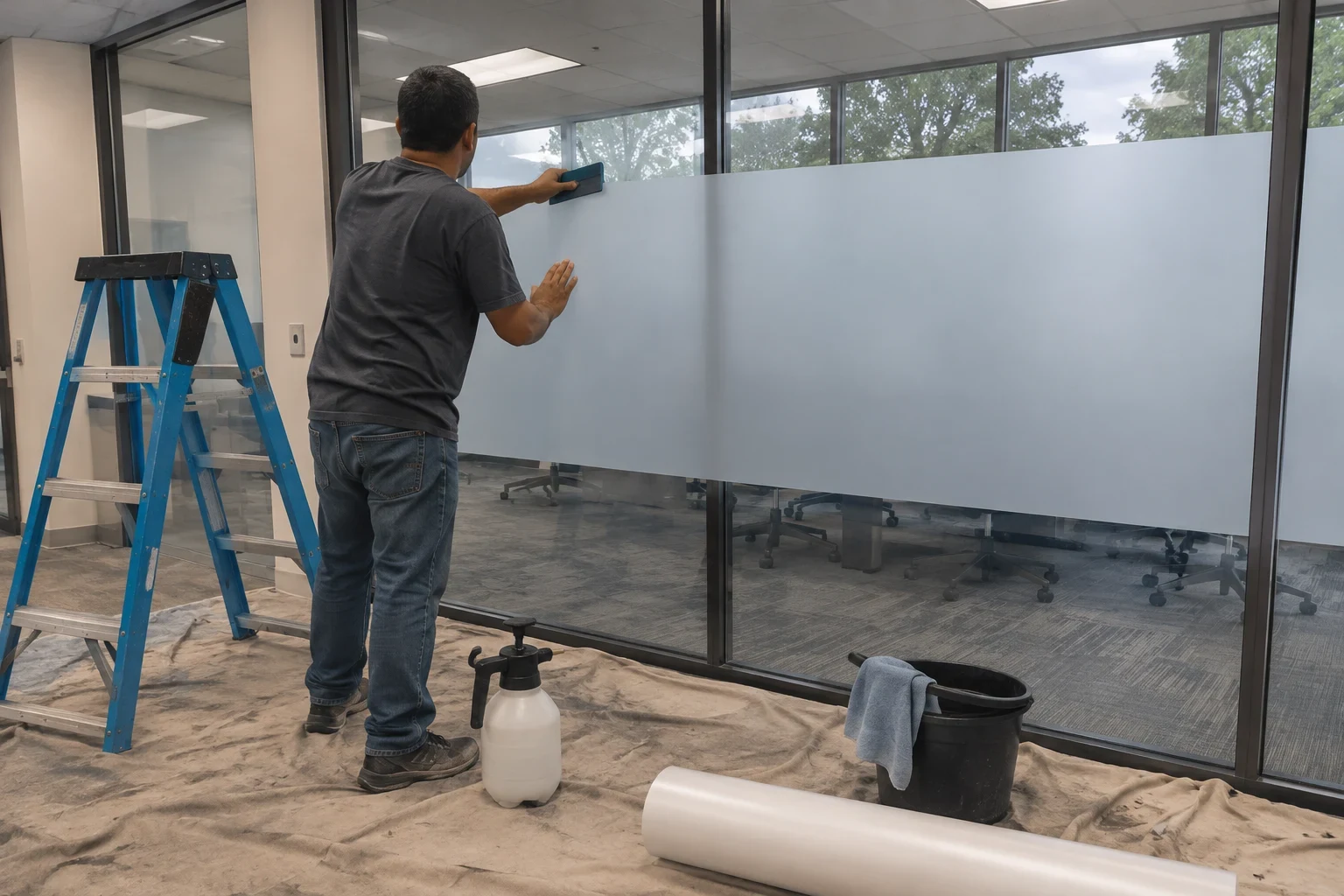
Non-reflective window film cuts heat and glare while your glass still looks like ordinary glass, day and night. Before we recommend a film, we check your glass type and any HOA or building rules, so the result suits both your windows and your street.
Clear glass that works harder
A lot of people want the comfort of window film but not the mirrored look of a reflective product. Non-reflective films, usually ceramic or other nano-particle constructions, reject a large share of solar heat and block most UV while reflecting about as much light as untreated glass. From outside, your windows look normal. From inside, the view stays clear after dark instead of turning into a mirror.
It is the right call when an HOA, deed restriction or landlord limits reflective finishes, when you like your windows the way they look now, or when you want to see out at night. It is a weaker choice where daytime privacy is the main goal. For that, our privacy window tinting and reflective window film pages explain the trade-offs.
Before any film goes on the glass, we look at the rules that apply. Most residential film work in Baytown does not call for a city permit, but many subdivisions have written standards for exterior appearance, and commercial spaces often need landlord or property management sign-off. We help you find out what applies and put the film specs in writing so your approval request is simple.
What comes with the job
- 01
Checking glass and frames
We record whether each window is single or dual pane, tempered or annealed, and whether it has a low-E coating. Certain films put extra heat stress on some dual-pane units, so this tells us which film is safe for each window.
- 02
Help with rules and approvals
We ask about HOA guidelines, deed restrictions and building management rules, and hand you the film's spec sheet with its visible light and reflectance numbers, which approval committees usually ask for.
- 03
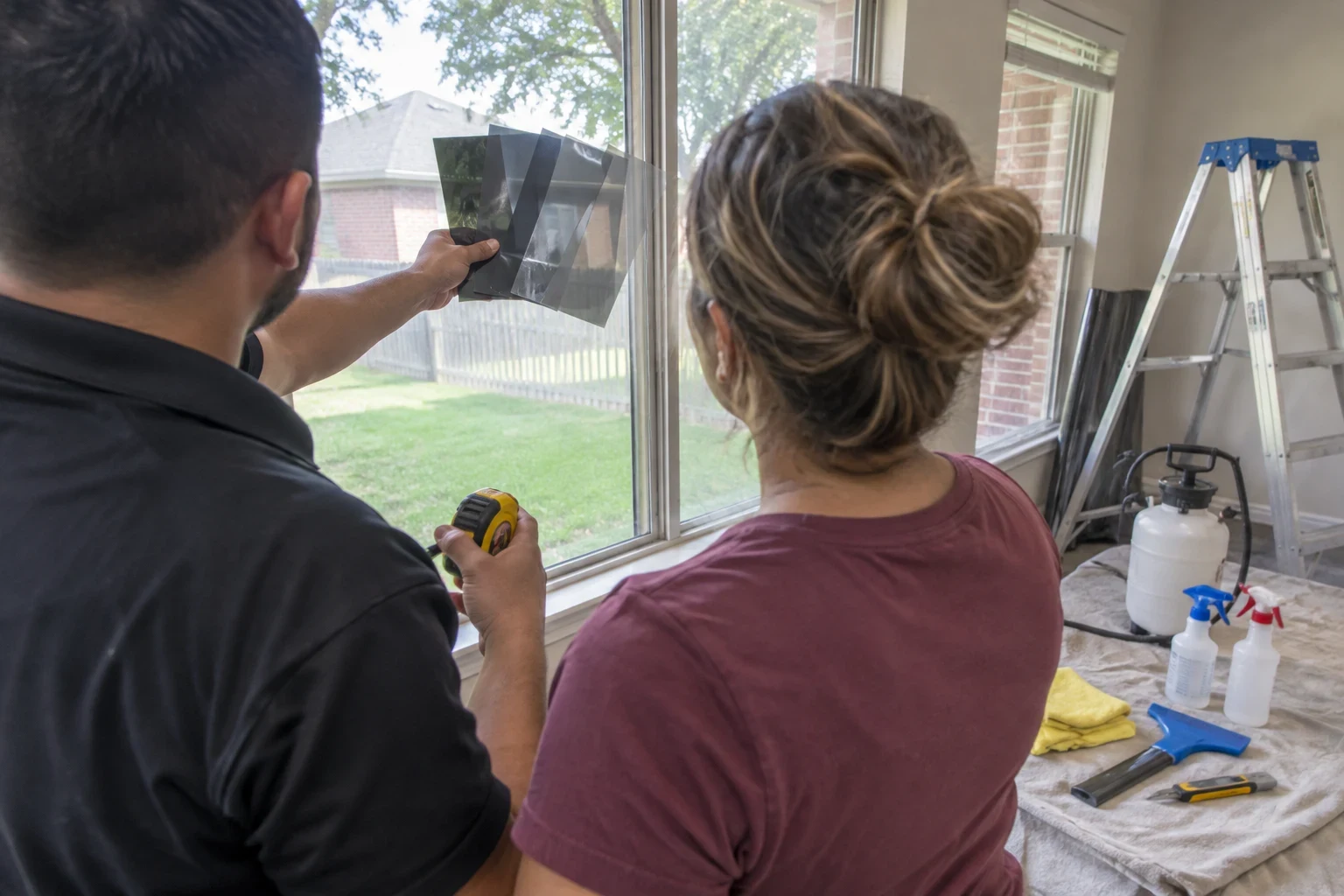
Samples held to your windows
You see sample pieces on your own glass, in your own light, so you can judge shade and clarity before deciding.
- 04
Thorough prep and fitting
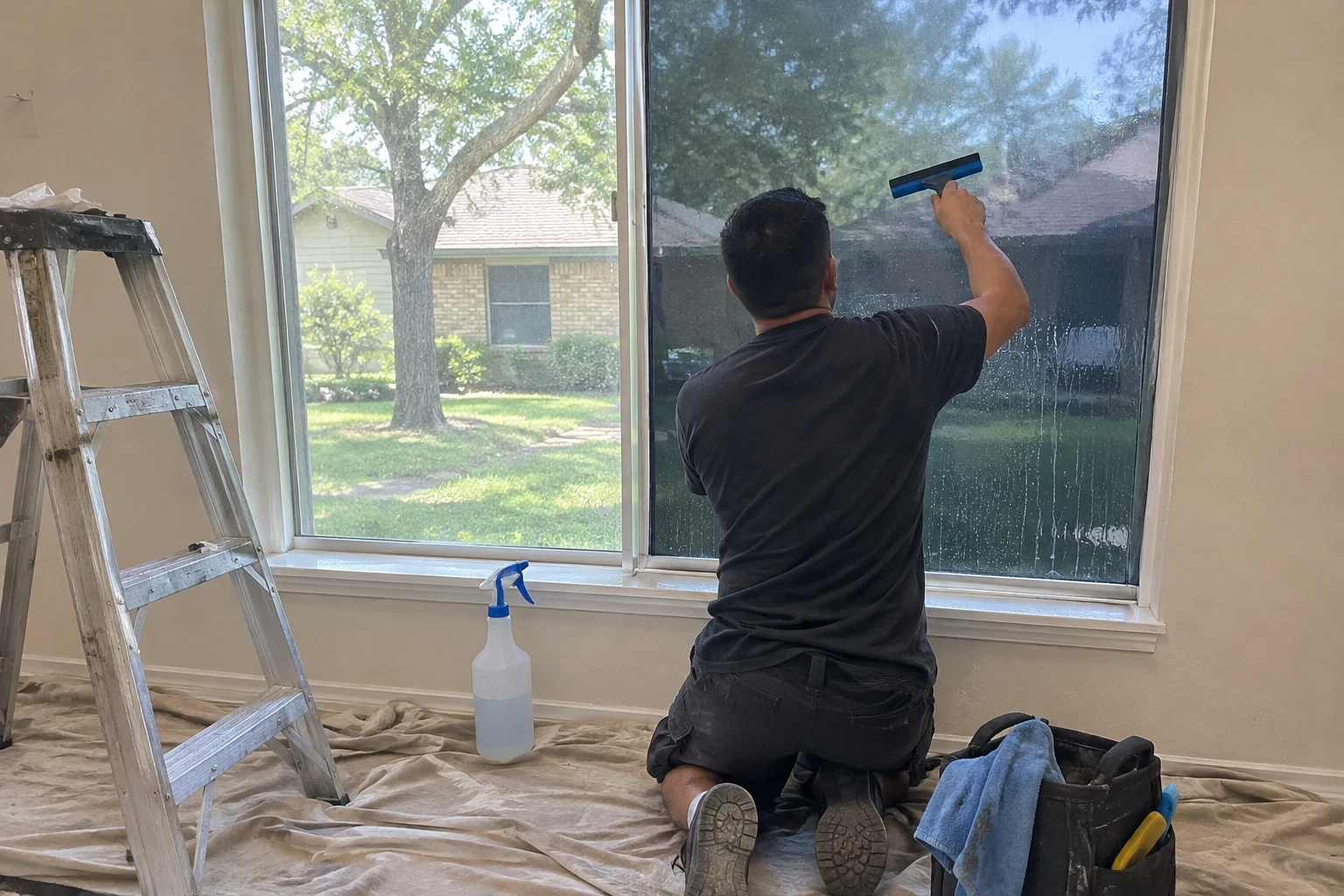
We clean and scrape the glass, detail the edges and trim the film with a narrow gap at the gasket so it cures flat and stays put.
- 05
Cleanup and care instructions
We wipe the sills, take every scrap with us and let you know how long to wait before the first cleaning and which cleaner to use.
Questions about Non-Reflective Window Film?
Call(281) 843-4500When non-reflective film makes sense
Afternoon heat that never lets up
South- and west-facing rooms hold heat well after the rest of the house cools off, and long Gulf Coast summers make the difference obvious.
HOA rules against mirrored windows
When your community limits reflective or dark exteriors, non-reflective film lets you reject heat and still follow the rules.
Screens you cannot see
You pull the blinds every day to read a monitor or watch TV, and give up the daylight to do it.
Floors and furniture losing color
Rugs, hardwood and upholstery near the glass have gone lighter than the rest of the room.
Windows that turn into mirrors after dark
Old reflective film shows you your own reflection every evening, and you would like to see outside again.
From first call to cured film
- 1
A short phone call
We cover the rooms that bother you, what the film should fix and any HOA or building rules in play, then pick a time to come out.
- 2
Measuring and a recommendation
At your home or office we look at the glass, hold up samples and explain which film suits each window and why. Your written estimate is itemized window by window.
- 3
The day we install
Drop cloths go down, and once you agree we shift small items away from the glass. Plenty of houses are finished in one day, and you get a time estimate beforehand so you can plan.
- 4
Drying out and checking in
Expect a faint haze or small water bubbles for a few days to a few weeks, depending on sun and humidity. Wait about a month before cleaning the film, and call us if something still looks wrong after it cures.
How the price comes together
Pricing goes window by window, and every line is spelled out in your written estimate, so there are no late additions. These are the items that shift the total most.
- How much glass, and how many windows
- Big picture windows and sliders need more film and more fitting time than a row of small panes.
- Which grade of film
- Ceramic films at the top of the range block more heat at the same brightness and cost more than entry-level non-reflective film. You see both sets of numbers next to each other.
- Reaching the glass
- Upstairs windows, transoms and glass tucked behind built-ins call for ladders or added care.
- Existing film and window style
- Stripping worn film and its glue takes extra time, and divided-light windows are fitted with many small pieces rather than a single sheet.
Non-reflective film: common questions
Does non-reflective film darken a room?
Only as far as you want. The film comes in several shades, and even some of the clearest ones block a fair amount of heat. You see samples on your own windows before you pick.
Is a permit or HOA approval needed?
A city permit is not usually required for film on a home, but an HOA or deed restrictions can still control how windows look from the street. We give you the spec sheet and reflectance numbers for your approval request and hold off on installing until it comes through. Offices and storefronts may also need the landlord to sign off.
Can film harm my windows or their warranty?
Certain films can add heat stress to some dual-pane or low-E glass, so we check each window and pick a film that suits it. Some window makers set their own terms on film, so it helps to find your paperwork, and we will go through it with you.
Does it block as much heat as reflective film?
Reflective film turns away more heat at the surface, so it usually leads on heat rejection, with the darkest look. A quality ceramic non-reflective film comes close and keeps a natural appearance. If heat is all you care about and looks do not matter, read our reflective window film page as well.
Will the film show from outside?
Most people never notice it. Depending on the shade, the glass can look a little deeper in tone, but there is no shiny mirror finish to catch the eye.
Is it a good choice for offices?
Yes. Offices use it often when screen glare is a problem and staff still want a clear view outside. Our office window tinting page goes into business installs in more detail.
Try the film on your own glass
Let us know which rooms get too hot or too bright, and we will arrive with samples and a written estimate. We confirm the rules for your street or building before any film goes up.